Elena Kostyuchenko

Independent Russian journalist and civil rights activist

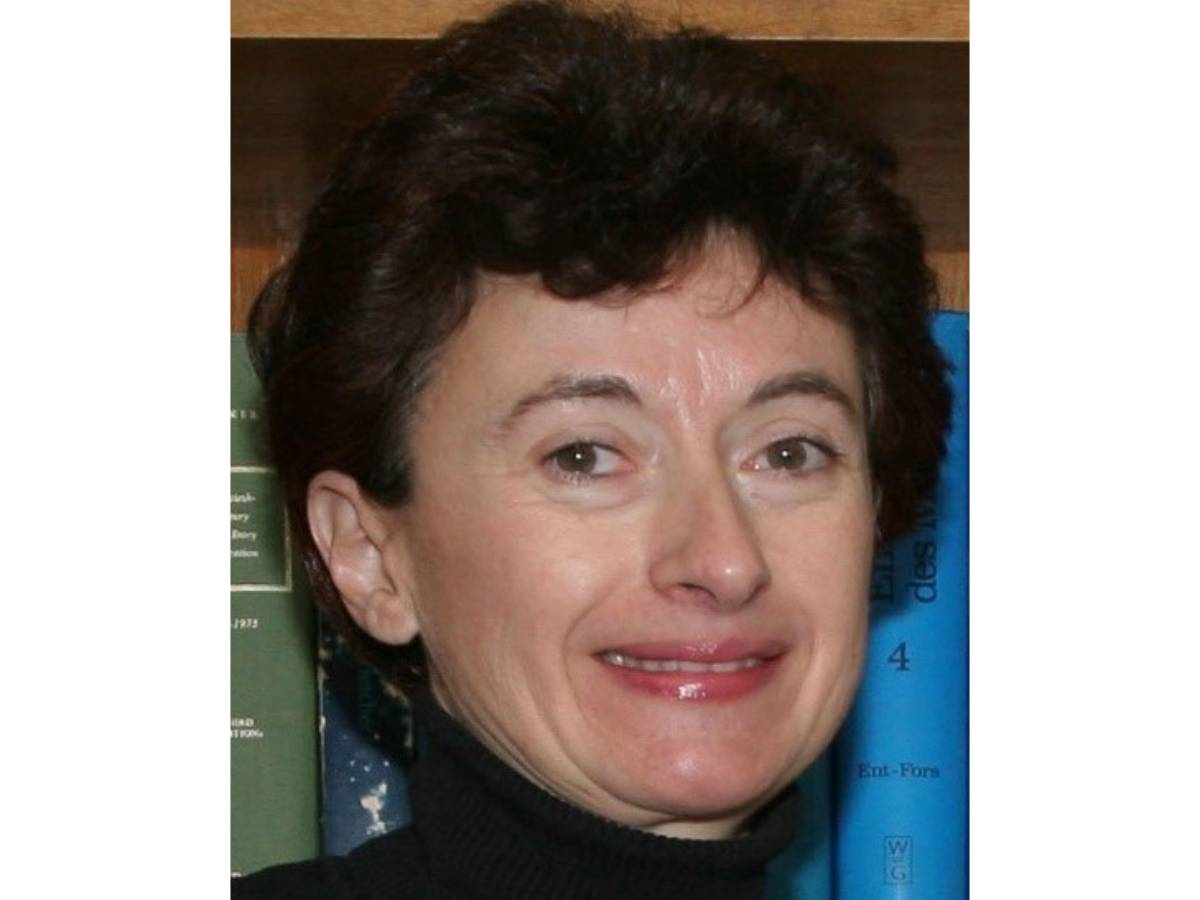
Elena Kostyuchenko is a Russian independent journalist. For 17 years she was a special correspondent of Novaya Gazeta, till the newspaper was shut down under the pressure of Russian authorities in March 2022. She reported on conflict, crime, human rights and social issues. Kostyuchenko was among the first to prove the presence of Russian troops in eastern Ukraine. She covered the Russian invasion of Ukraine from the second day of the war. Now she collaborates with the independent Russian exiled media Meduza.

Kostyuchenko’s book “I Love Russia”, named one of the best books of the year by The New Yorker and TIME, documents her country as experienced by those whom it aims to erase: girls from the provinces coerced into sex work, queer people, patients and doctors at a Ukrainian hospital under attack, and reporters like herself targeted by the abusive government. Her work was acknowledged with multiple awards including the European Press Prize, the Gerd Bucerius Award-Free Press of Eastern Europe, and the Paul Klebnikov Prize.

Summer School of Investigative Reporting 2024 Sessions

How to Report From a Lost Country

Session explores the unique challenges of reporting from authoritarian countries, including fieldwork strategies, source recruitment, safety, resisting government pressure, verifying information, and countering propaganda, using Russia as a case study.

Ivana Jeremic

Digital Rights Programme Content Lead / Editor
BIRN Hub

An award-winning journalist and editor, currently focused on digital rights. Ivana specialises in topics such as investigating organised crime, misuse of public money, digital rights and the use and impact of AI.

In 2021, she completed the European Broadcasting Union’s media trainers program. She began her career at the Center for Investigative Journalism of Serbia (CINS) and later became Deputy Editor-in-Chief.

She has been a fact-checker at OCCRP since 2013 and an External Assessor at the International Fact-Checking Network since 2017. Her accolades include the European Press Prize, Anthony Lewis prize and the Balkan Fact-Checking Award.

Summer School of Investigative Reporting 2024 Sessions

Gender-based Violence Online: Reporting for Impact

Ivana Jeremic and Kreshnik Gashi will jointly enhance media reporting on online gender-based violence by using practical tools and experiences to promote ethical reporting, protect victims, and drive actions from social media platforms and governments. A series of impact gender-based violence stories will be presented as case studies.

Jakub Górnicki

Reporter and Co-founder of Outriders
Outriders

Jakub Górnicki is a reporter and co-founder of Outriders, an award winning media publication combining art, journalism, and technology to create stories about global issues and events. Jakub covered the migration crisis in 2015, Belarusian protests in 2022 and war in Ukraine. He remains focused on migration and conflict. He is the winner of Paszporty Polityki, INMA Global Media Awards and European Press Prize nominee.

Previously, as a COO and board member of ePaństwo Foundation, he developed it into a leading open data/transparency NGO globally. Over six years he established Code for Poland and took it into Code for All together with Code for America Open Cities – a programme helping European cities adopt open data policies.

Summer School of Investigative Reporting 2024 Sessions

Visual Storytelling: What is There to Learn From Outriders?

Outriders team, Jakub Górnicki and Anna Gornicki, will provide participants with knowledge on mobile-first visual storytelling projects, including a mobile-first approach to design and content creation, showcasing five innovative projects that integrate mobile, 360, and illustrative journalism, explaining their construction, and discussing how teams manage cross-border technological projects and diverse methods to convey complex global stories.

Jonathan Soma

Knight Chair in Data Journalism
Columbia University Journalism School (CUJS)

Jonathan Soma is Knight Chair in Data Journalism at Columbia University, where he is director of both the Data Journalism MS and the summer intensive Lede Program. He lectures at Columbia on everything from basic Python and data analysis to interactive visualisation and machine learning. As an educator, programmer, and designer, he focuses on making unapproachable concepts accessible, and has worked with ProPublica, The New York Times, and others.

Summer School of Investigative Reporting 2024 Sessions

Data Journalism: Navigating the Challenges Posed by AI

Session dedicated to foundational understanding of tools and processes in data journalism: exploring data sources and visualisation techniques, and learning how to effectively navigate the challenges of data-driven storytelling, from spreadsheets to AI, while developing the skills to continue advancing.

AI Do’s and Don’ts

Explore how to responsibly use AI in modern, data-driven investigations by automating tasks like document sorting, information extraction, and transcription, while also understanding the limitations and ethical considerations to ensure balanced and accurate reporting.

Group sessions: Advanced Data Journalism

In this workshop on data analysis and cleaning with Python, you’ll learn how to use Python, Pandas, and Jupyter notebooks to efficiently process and analyse large datasets, create reproducible workflows, and uncover hidden stories, transforming your data journalism capabilities beyond the limits of Excel and Google Sheets. Learn to extract and transform hidden web data into structured datasets, covering techniques like pulling data tables, extracting articles, automating downloads, and setting up scrapers for continuous data collection using Python.

Kreshnik Gashi

Head of the Planning Desk and Managing Editor
Kallxo.com, BIRN Kosovo

Editor-in-chief of KALLXO.com., Kreshnik is a law graduate and a winner of over 20 journalistic prizes for in-depth investigations into corruption and abuse of public duty. He joined BIRN in 2012 and since then has produced over 300 investigative TV programmes and around 1,000 investigative articles. As a result of his work, over 10 prosecutors and judges and over 30 police officers were arrested and charged, while 10 public officials including ministers and mayors were indicted for corruption. His investigations into organised crime saw over 10 members of organised crime groups active in loan sharking, gambling, smuggling and other major crimes being arrested and indicted. Gashi is the author of over ten in-depth comprehensive reports on terrorism, corruption, transitional justice, financing of the media, disinformation and gender-based violence/gender equality in Kosovo.

Summer School of Investigative Reporting 2025 Sessions: 

Legal Considerations, Case Illustrations, and SLAPP Insight

The session will explore the importance of the legal editor in the development of in-depth investigative journalism. By providing concrete examples, it will highlight the crucial role of the legal editor from the initial planning of the investigation to the interpretation of the law throughout the investigative process.

BIRN Awarded Investigative Stories

Kreshnik Gashi and Saša Dragojlo will deliver jointly an insightful session in which these two award-winning journalists share experiences from their most acclaimed investigations. This session offers a behind-the-scenes look at their work, highlighting practical techniques, challenges faced in the field, and key lessons learned from the front lines of investigative journalism.

Maria Georgieva

Investigative journalist
Swedish public broadcaster SVT

Maria Georgieva is an award-winning investigative journalist working for Swedish public television’s current affairs programme “Mission Investigate (Uppdrag Granskning)”. She combines investigative journalism with data and classic fieldwork. Previously, she was based in Moscow for almost 8 years, and has uncovered Putin’s spies in Scandinavia, and Chechen strongman Ramzan Kadyrov’s killing campaign on Chechen dissidents in the investigation ‘The Russian Hitmen’.

She was nominated for the Swedish Grand Prize in journalism in 2022 and was selected as a finalist for best investigation by the International Reporters and Editors jury (IRE) in 2023. Maria speaks fluent Russian and has reported for Swedish and international media, such as The Guardian, The Telegraph, Swedish public radio, and newspapers Dagens Nyhetere and Svenska Dagbladet. Maria also has experience working with open source data and has previously collaborated with OSINT-networks such as Bellingcat and The Dossier Center.

Summer School of Investigative Reporting 2024 Sessions

Mission Investigate at Scandinavian Public Broadcasters

Maria Georgieva and Ali Fegan will join forces to deepen the understanding of how digging in databases combined with classic fieldwork can create ground-breaking and impactful investigative journalism.

Putin’s Shadow War: How Did We Do It

Maria Gerogieva and Ali Fegan will demonstrate how Nordic public service broadcasting effectively employs data and classic fieldwork by showcasing their Case study.

Monika Kutri

Journalist safety specialist
The Croatian Journalists’ Association (CJA)

Monika Kutri is a project manager and journalist safety specialist at the Croatian Journalists’ Association. Over the past five years, her primary focus has been on the safety of journalists in Croatia and the Balkan region as part of the SafeJournalists network. She is the author of the annual Indicators of Media Freedom and Journalist Safety in Croatia, as well as the Journalist Safety Index. In recent years, Monika has been increasingly involved in digital security. Since 2022, she has been a trainer in digital security for journalists, continually enhancing her skills and expertise in this area.

Summer School of Investigative Reporting 2024 Sessions

Shielding the Truth: Digital Security Essentials for Journalists

In an era of pervasive digital threats, this session equips journalists with essential knowledge and tools to safeguard their communications, sources, and data against cyber attacks and surveillance, covering the latest encryption techniques, secure communication methods, and best practices for digital security.

Group session: Digital Security, Virtual Reality (VR) and through Tabletop Exercises (TTX)

The session will simulate scenarios using VR and through TTX, preparing participants in a secure environment to identify and mitigate digital threats. A VR experience will allow journalists to practise making critical decisions which impact their digital security and to safely experience the sensation of sustaining an attack, while TTX  to discuss key digital security dilemmas and assess their organisation or community’s readiness to respond to incidents.

Redon Skikuli

Digital Infrastructure
Expert CryptoParty Tirana (CPT)

Redon Skikuli has been a digital rights and Free Libre Open Source promoter since 2012. Co-founder of Cloud68.co, Open Source Conference Albania (known widely as OSCAL), CryptoParty Tirana and LibreLabs Albania. Redon is a passionate advocate for open knowledge and online privacy, based in Tirana, Albania. He studied communication and marketing in Athens, but changed direction when he co-founded the first hackerspace in 2012. Since then, he’s been at the forefront of initiatives like CryptoParty Tirana and OSCAL, driving conversations on digital rights and open access in Tirana. His dedication to open knowledge is evident in extensive contributions to projects like OpenStreetMap, Wikimedia Commons, and Wikidata. Last but not least, Redon has been invited to various open-source conferences as a presenter, sharing insights on various topic with emphasis on digital rights in the post Snowden age.

Summer School of Investigative Reporting 2024 Sessions

How do Tech & Journalism Intersect and What to Do With It

Redon Skikuli and Boris Budini will jointly explore how to extract more insights from publicly available open-source information online,  showcasing of powerful tools and practical skills for investigative journalism. From data analysis to online research, we will try to get some practical skills and resources that can be used daily.

Group session: Advanced Deep & Dark Web

In this session, Redon Skikuli and Boris Budini will explore safe navigation techniques for investigating stories on the deep and dark web, including advanced methods for secure payments and information analysis, with live demonstrations and hands-on experience.

Ricardo Gutiérrez

Ricardo Gutiérrez is the General Secretary of the European Federation of Journalists, EFJ, the largest organisation of journalists in Europe, representing over 320,000 journalists across 45 countries.

A former journalist for the Belgian daily newspaper Le Soir, he is senior lecturer at Université Libre de Bruxelles, ULB. He is a member of the Belgian Press Council CDJ and of the Executive Committee of the European Trade Union Confederation ETUC. He has conducted training for journalists on hate speech, ethical journalism and reporting on ethnicity and religion. He is also a member of the board of experts of the Justice For Journalists Foundation and is a member of the jury of the Fetisov Journalism Awards. You can catch a glimpse into his interests (i.e. journalism and media freedom) by following him on Twitter (https://twitter.com/Molenews1) and Facebook (https://www.facebook.com/RicardoGutierrezVe).

Hanna Liubakova

Hanna Liubakova is a journalist and analyst from Belarus.

Hanna is a non-resident fellow at the Atlantic Council. She has written about the latest developments in Belarus for The Washington Post, The Economist, Deutsche Welle, and other international outlets. She started her career at the only independent Belarusian channel Belsat TV, now banned by the regime in Minsk. Liubakova reported in four languages from various countries and regions, including Belgium, the UK, Poland, and Chechnya. She is currently writing a book about Belarus.

Liubakova is widely recognised as one of Belarus’s leading voices of the free press. Her coverage of the protests against the authoritarian regime of Aliaksandr Lukashenka garnered significant attention. She was forced to flee Belarus and later learned she was on the regime’s wanted list. Despite this, she has continued to report on the people’s resistance, which has become even more crucial amid the Belarusian regime’s participation in the war against Ukraine.

Liubakova won the 2023 One Young World Journalist of the Year Award. In 2021, she was a European Press Prize finalist. In 2019, she was the first fellow from Belarus chosen to participate in the World Press Institute Fellowship in the US.

Hanna holds an MA with distinction in International Journalism from Brunel University London, where she won the Peter Caws Prize for best postgraduate dissertation in 2017. She also received the Vaclav Havel Journalism Fellowship at Radio Free Europe/Radio Liberty in 2014.