
by Aleksandra Vrbica
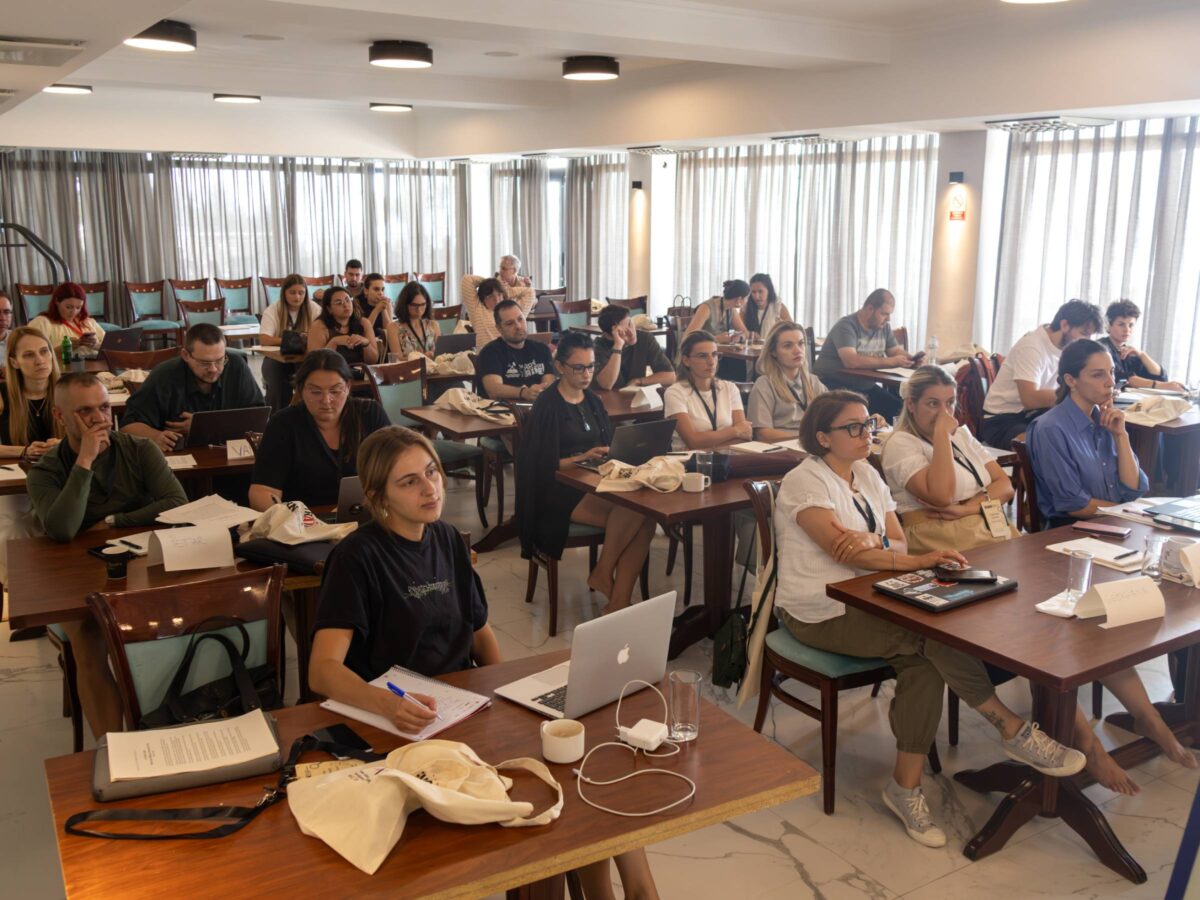
On Monday, August 18, the 2026 BIRN Summer School of Investigative Reporting officially began in Ohrid, bringing together journalists from across the region and beyond for a week of intensive learning, collaboration and investigative journalism.
The week-long summer school brings together around 30 participants from Albania, Bosnia and Herzegovina, Croatia, Kosovo, North Macedonia, Serbia, Ukraine, Romania and Bulgaria. Over the course of the programme, they will learn how to distinguish suspicion from fact and set high standards for investigative reporting.
The participants were welcomed by Ana Petruseva, BIRN Macedonia Executive Director; Gentiana Murati, BIRN Deputy Director; and Blake Morrison, lead trainer and Investigative Projects Editor at Reuters News.

The first day started with Blake Morrison‘s session, which set the tone for a week focused on one central question: How do we go beyond reporting what is happening and investigate why it is happening?
During the introductory presentation, Morrison presented a case study of a journalist who reported untruthfully, explaining the consequences for the profession as a whole and those who become the victims of fabricated stories.

Gordana Andric, Investigative Editor at BIRN Hub and BIRN Serbia, also discussed formulating story ideas and how participants should structure their pitch.
The session guided participants through the steps of developing a story idea into an article proposal. There was a discussion on sources and newsworthiness, how to move from a broad topic to a specific angle, what the key elements of every pitch are and why all of this matters.

During the second part of the day, a Q&A session was held with BIRN investigative journalists Gordana Andric, Sasa Dragojlo and Ana Petruseva, moderated by Jeta Xharra, BIRN Kosovo Director.
The session brought together BIRN’s leading investigative journalists to discuss how they developed stories from initial ideas into impactful investigations. Through a moderated Q&A and discussion, participants explored the editorial choices, research, challenges and investigative approaches behind 10 selected stories, gaining practical insights from the journalists’ experience.

Among other things, Petruseva presented BIRN Macedonia’s interactive online database Skopje 2014 Uncovered, which documents and maps the publicly-funded buildings, monuments, facades and sculptures that transformed the capital city. She gave input into how information of public interest can be checked.
“First, we relied on the electronic system. But the problem was – and this is how we figured out that the government wanted to hide this from us – there would be a lot of typos in the documents. You would go to a certain building, and it wouldn’t be the correct address,” Petruseva said, explaining some of the issues they experienced while working on this investigation.
Petruseva also presented the database on religious communities’ assets in North Macedonia.

Sasa Dragojlo explained how BIRN worked on a story about Serbian-Israeli ammunition cooperation and the latest investigation on Serbian President Aleksandar Vucic and his connection with Jorg Heeskens, who has been advising Vucic almost since the moment he took power. Documents obtained by BIRN/Der Spiegel show just how closely Heeskens has worked with Vucic on a deeply unpopular lithium mining project, exposing what critics say is German complicity in the president’s subversion of democracy.
Over the coming days, participants will work with experienced journalists and trainers to strengthen their skills in investigative reporting, develop story ideas, explore new research and digital tools, and learn how to turn questions and suspicions into well-evidenced investigations.