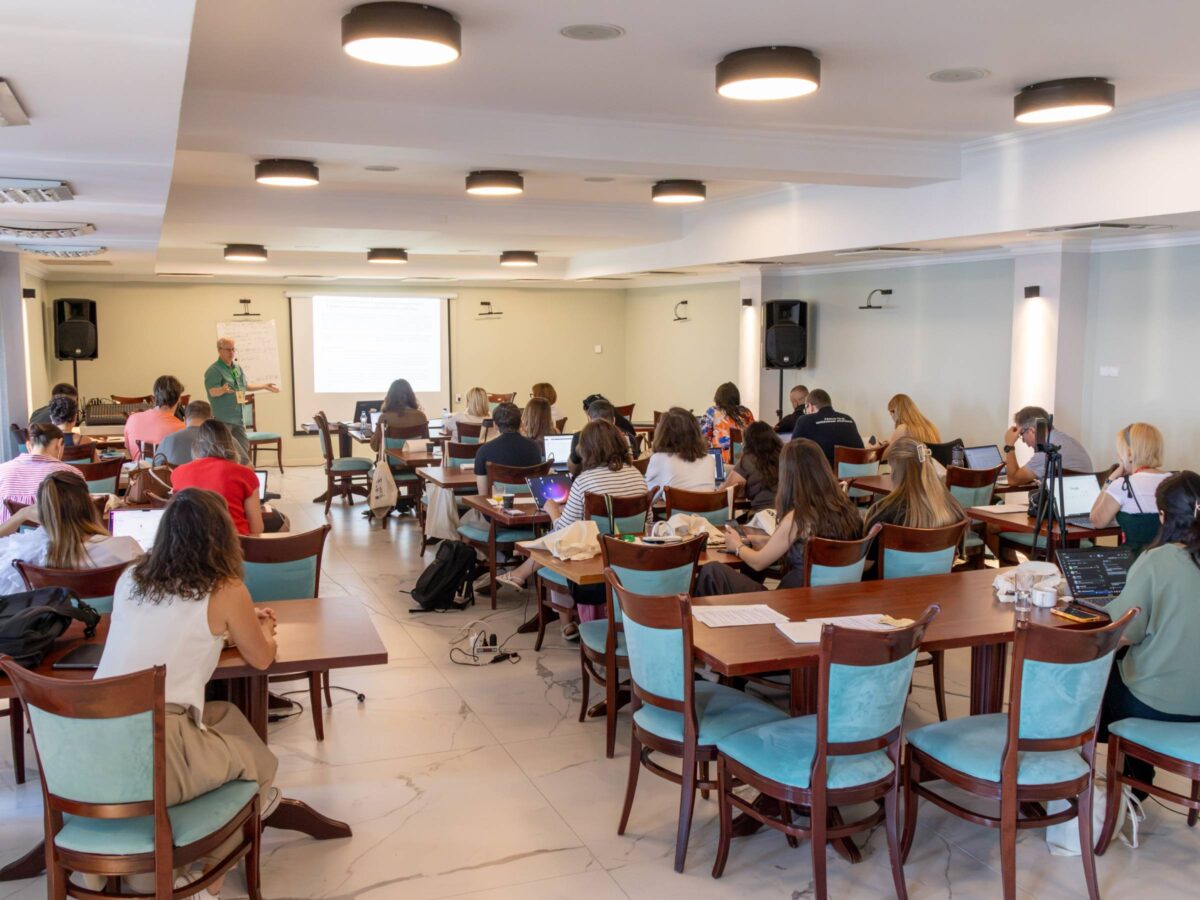
BIRN Summer School 2026 – Final Day. From Heatwaves to Public Spending: How Journalists Can Find and Investigate Environmental Stories and Pitch Investigations

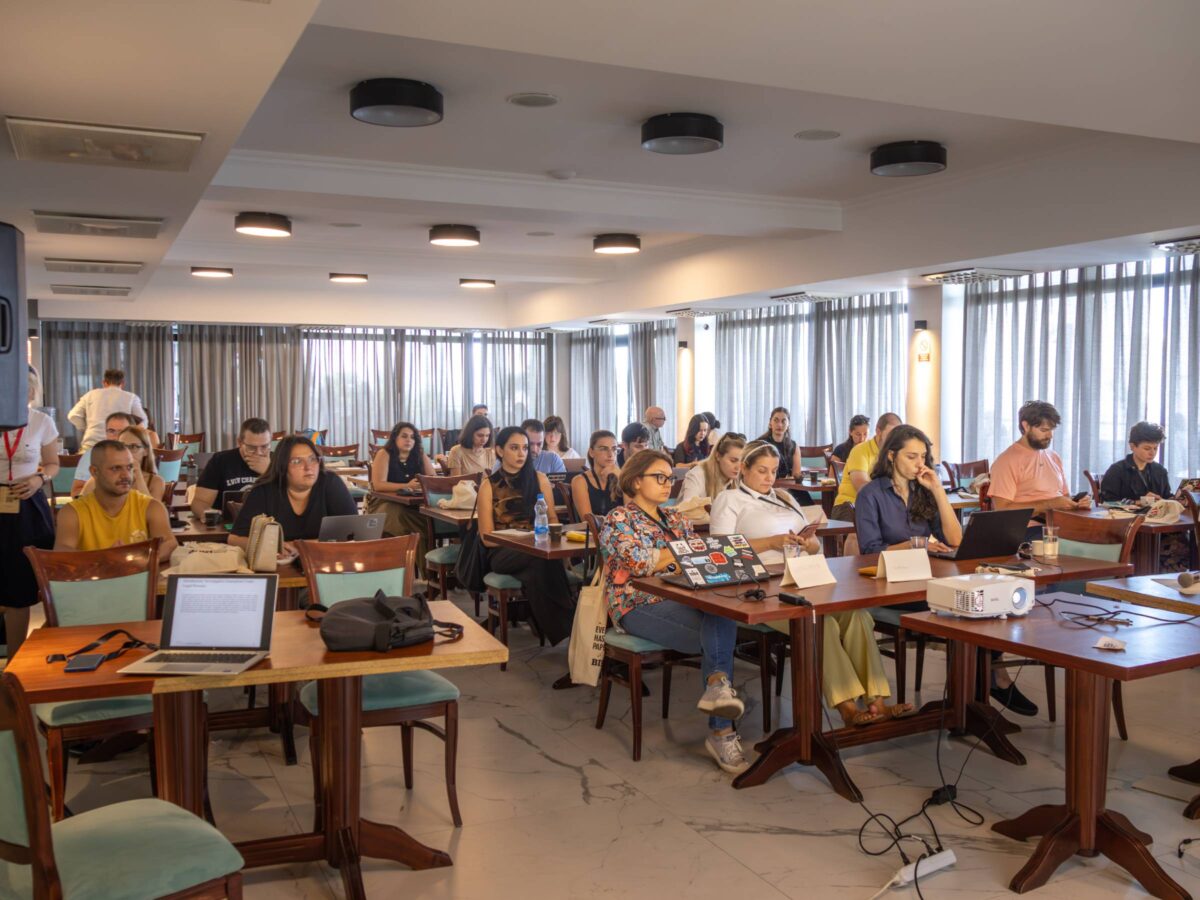
The final day of the BIRN Summer School 2026 featured several sessions on environmental investigative journalism. Afterwards, participants presented their story pitches to a jury. The strongest ideas will receive funding for further development.

by Marija Vasilevska

“How to Identify Strong Environmental Stories in Local Communities?” was the opening panel discussion on the final day of the BIRN Summer School in Ohrid. Journalists Katerina Topalova from North Macedonia, Dragan Gmizic from Serbia and Wojciech Oleksiak from Poland shared their experiences in identifying and developing local environmental issues into strong investigative stories. BIRN’s Gordana Andric acted as moderator.

The discussion explored the first signals and “red flags” that can indicate a story worth investigating, before looking at how to assess roader public interest. The panelists explained where journalists could find promising leads. Sources ranged from communities, activists and local media to inspection reports and environmental permits. Public procurement, court proceedings and company activities also featured.

The speakers discussed how journalists can look beyond environmental issues to broader concerns. These include institutional and corporate responsibility, financial interests and corruption. The panelists also highlighted conflicts of interest, weak enforcement and the misuse of public resources. They emphasized the importance of verifying information from local communities through documents, data, expert sources and field reporting.

Another talking point was the potential for seemingly small local issues to reveal wider systemic problems, and develop into national, regional or cross-border investigations. Drawing on examples from their own work, the speakers also reflected on common challenges. These included limited access to information and data, relations with local authorities and companies, and difficulties in finding independent experts.

The day continued with Diego Arguedas Ortiz, a journalist, editor and media trainer specialising in climate change and climate journalism. His experience includes working with Oxford University’s Reuters Institute, the Global Investigative Journalism Network (GIJN) and the Knight Center for Journalism in the Americas. From 2022 to 2025, he was Associate Director of the Oxford Climate Journalism Network, where he led training programmes for hundreds of journalists and editors.

Diego led two sessions focused on strengthening environmental investigations. “Looking Under the Hood: Where Is the Money Going?” explored how journalists can follow financial flows behind environmental and climate issues. “How to Cover Heat: Ideas, Principles and Examples of Good Investigations” followed, offering practical approaches and examples for investigating the growing impact of extreme heat.

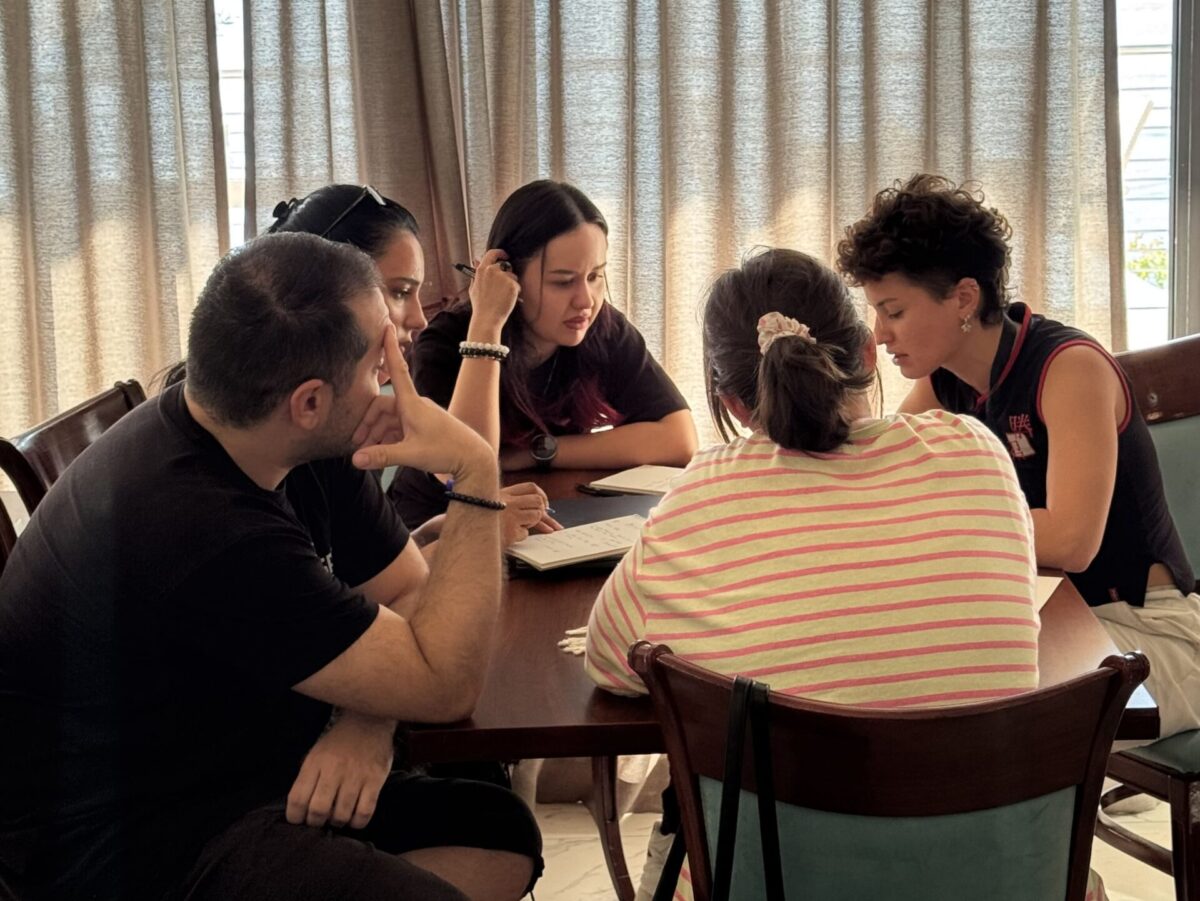
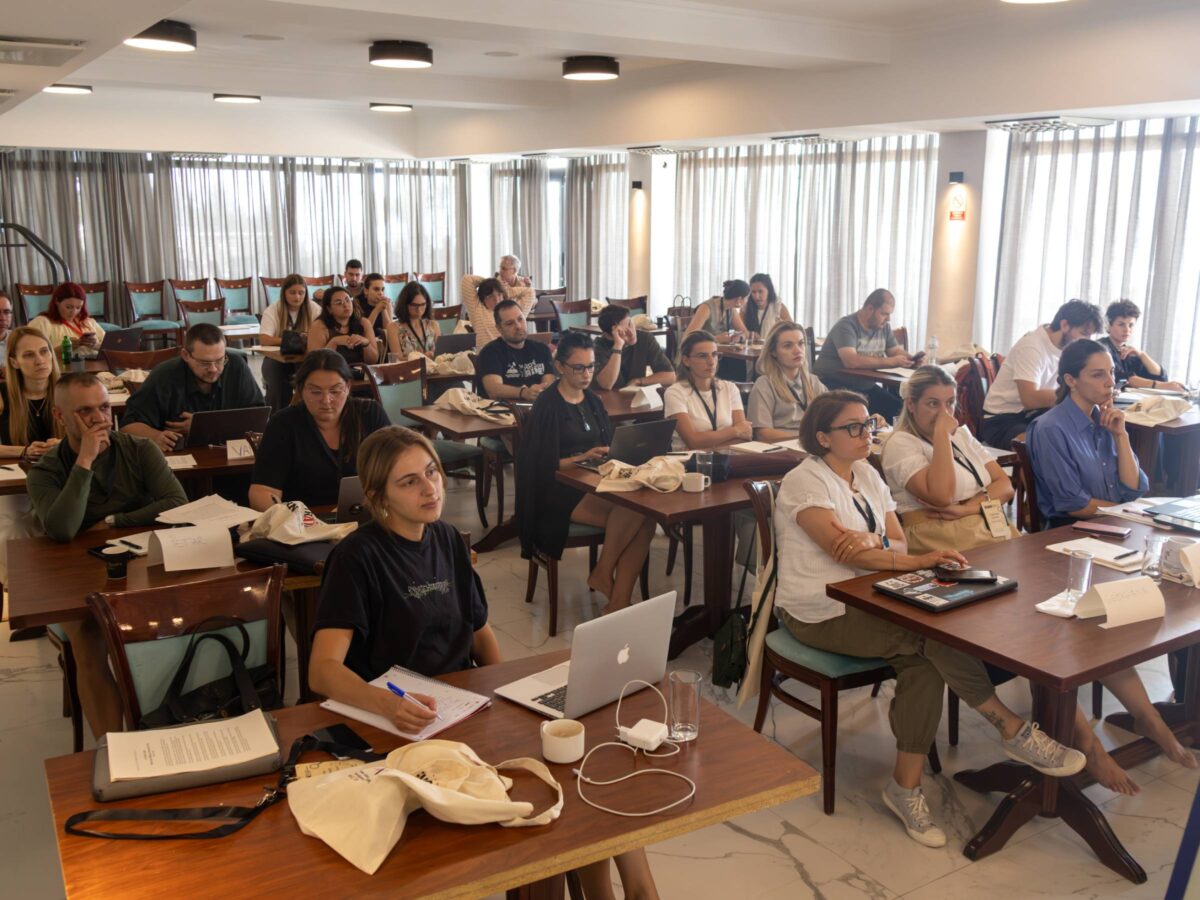
Blake Morrison, Gordana Andric, Sasa Dragojlo and Besar Likmeta worked with all 30 participants to help them turn their story ideas into strong and well-developed pitches. Drawing on the skills and knowledge gained throughout the Summer School, participants refined their ideas and presented their final pitches one by one to a jury for evaluation.

The day concluded with all participants receiving certificates marking their successful completion of the BIRN Summer School 2026.
BIRN Summer School 2026 – Day 5: Legal Risks, Geolocation, FOI, Visual Investigation, Environmental Journalism

Legal pressures, geolocation and visual investigation were on the agenda on the fifth day of BIRN Summer School. The experts’ topics also included Freedom of Investigation requests and environmental reporting.

by Aleksandra Vrbica

The fifth day of the BIRN Summer School in Ohrid opened with Bojana Paneva, Senior Associate from Karanovic & Partners Commercial Law Firm. She spoke to participants about reporting under legal pressure, with confidentiality one of her concerns.

“Confidential sources are frequently indispensable to investigative journalism. Individuals with knowledge of corruption, institutional misconduct or corporate wrongdoing may be willing to speak only if their identity is protected. Macedonian law recognises this directly,” stated Paneva.

She also explained the legal measures for protecting journalists and shared several cases from her experience.

After Paneva, Balkan Insight journalist Azem Kurtic held a session on geolocation and visual investigation.

Kurtic presented a case study in which the location was detected based on a single photo. It followed the conviction of a Bosnian-born woman at a court in the Danish city of Odense, as detailed in the “Black Swan” documentary. She was found guilty of fraud and attempted fraud amounting to 1.8 million Danish kroner, receiving a three-month prison sentence, with an additional 15 months suspended.

“She declared bankruptcy, but journalists suspected that she moved some of her money back to Bosnia. Thanks to one photo, we found her villa in the country. It was a shadow, a swimming pool and a mountain view that gave it away,” said Kurtic.

The participants did an exercise based on Kurtic’s investigation on the criminal group from Bosnia and Herzegovina. They analysed every relevant detail from a photo of these people, using Google Street View and social media to determine the exact location and venue in Dubai where the photo it was taken.

BIRN Macedonia Director Ana Petruseva held a session on Freedom of Information (FOI) and how journalists can use it to strengthen their investigative reporting. Through real-life BIRN Macedonia examples, Petruseva explained why access to public information is important.

“These are just some basic rules – when to file a request: when other approaches and attempts haven’t worked, when you believe that it is the only way to get the information and when you deliberately want to exercise your right to it,” she said.

Petruseva explained where FOI requests should be filed and what to ask, as well as giving exceptions. Petruseva also addressed the importance of timing.

“In 2016, there were elections in Macedonia, and in 2017, a turmoil followed, which led to the attack on the Parliament. We were aware that the change of government was coming. Knowing that, we filed requests to several ministries at the same time for the documents that showed all the representative costs, which included buying suits, paying dinners, and some bizarre costs. That way, we were able to gain all this information from the new government,” explained Petruseva.

BIRN Albania’s Editor in Chief Besar Likmeta introduced the “Flamingo Revolution” to participants and explained the importance of environmental journalism in the middle of a protest. He explained how the reporting started on Jared Kushner’s controversial plans for coastal resort developments at Zvernec and Sazan Island.

“What we knew when we started investigating this topic? The land was disputed, there was a very sensitive, protected area, and the government wasn’t telling us what it was doing,” said Likmeta.

In this case, one story became five.

“We had a story about the environment. Than we had a story on property and who owns the contested land. We had the business investigation on who stands behind the development. We also had the investigation on government and who authorised the project, and what happens when citizens challenge the project, and what role does the organized crime play. And with Kushner’s role, this became an international topic,” Likmeta explained, adding that online activity also became important.

“Because of many trolls on social media, the information war came with the protest,” he concluded.

The fifth day wrapped up with a session on climate investigations, led by climate journalist and media trainer Diego Arguedas Ortiz.

“Why to report on fossil fuels? For the first time, we have the electricity that is produced more from the renewals, than from the coal, but it’s not fast enough because we need more energy every year”, he told participants.

Ortiz presented several resources journalists could use in their reporting.

“A few tools to understand where are the fossil companies and projects are Carbon Majors, Global Coal Exit List, Coal data from Global Energy Monitor,” he noted, illustrating how these tools could be used, as well as the benefits of geo-spatial mapping.

He also stressed energy and mining companies’ impact on nature and communities, noting that banks, law firms and PR agencies are among the enablers of their projects.

BIRN Summer School 2026 – Day 4: Engaging Citizens, Fact-Checking and Investigating Pollution

The experts’ sessions during Day 4 of the BIRN Summer School covered the importance of fact-checking, the basics of policy-oriented investigative reporting and how to use citizen engagement tools for investigations.

by Aleksandra Vrbica

The first session of Day 4 of the BIRN Summer School in Ohrid started with BIRN consultant Alex Anderson’s session on policy-oriented investigative reporting.

Anderson recounted a two-week project he completed in Ukraine in 2014 titled “Ukraine must stop ongoing abuses and war crimes by pro-Ukrainian volunteer forces”. This was a quick-fire policy intervention report that required him to complete a seven-page report with a three-day turnaround from field to publication.

He also walked the participants through another project he did. Published with Human Rights Watch, his report “Leave None to Tell the Story” addressed genocide in Rwanda. The report was published five years after the events and was more than 600 pages long.

The day continued with a session on the Engaged Citizens Reporting (ECR) Programme, BIRN’s audience engagement tool. The session was led by Ana Petruseva, BIRN Macedonia Director, and Karla Junicic, Engaged Citizens Reporting Programme Coordinator at BIRN Hub.

“It can be created in multiple languages. Everything that people upload is encrypted, and one of the most important things ECR provides is digital safety,” Junicic said.

This tool is also used by other media outlets in the Western Balkans.

“We trained different media in the region to work with this tool. For citizens – this is a safe place, they don’t necessarily have to share their names if they don’t want to,” Petruseva added.

However, not every topic is an engagement topic.

“Some good topics for ECR are healthcare (for example, the waiting lists), daily evidence of corruption, environmental issues. It’s always important to do a pre-research and you should ask yourself – who is your stakeholder, what language are they using, and how to reach them,” explained Junicic.

She shared the BIRN investigation TikTok Used Across Balkans to ‘Slutshame’ Women and Girls with participants as a way of demonstrating how ECR can help in the investigation process. Through this tool, one of the victims left her contact information, which enabled the investigation’s author to interview her.

After Petruseva and Junicic’s session, Felicia Cretu, editorial fact-checker at CU SENS Media Project, held a session on fact-checking. She presented the checklist of what should be checked before the publication of an investigation: names, spelling, numbers and statistics, quotes, descriptions and any potential bias.

Cretu warned that using Wikipedia or media outlets that don’t fact-check as a source is something that can land journalists in trouble or result in a legal suit. “That’s why we verify every date, time period, time frame in the story,” Cretu said.

Together with participants, Cretu did an exercise from her organisation and showed all the steps she used to fact-check information.

The final session was on reporting on the environment, how to investigate pollution and the risks and impacts on public health.

Blake Morrison, lead trainer and investigative projects editor at Reuters News, discussed his investigation into the impact of pollution on children, a topic that was not sufficiently investigated in the United States at the time.

“First, I got two databases – the location of every school, and the location of every polluter in America. And I was looking for a school that the government had to close because it was so toxic. I found one near a plastic factory where the risk of getting cancer was 50 times greater than what was allowed by law,” explained Morrison. Later, he found more than 150 such locations.

The topic started a lively discussion with the participants, and the day ended with work on pitches that journalists will present on the final, sixth day of the summer school.

BIRN Summer School 2026 – Day 3: Journalists’ Security, Investigations’ Impact and the Art of Interview

Journalists at the summer school learned more tools to keep them safe in the real world and participated in sessions on policy-oriented investigative reporting and the art of interviewing.

by Aleksandra Vrbica

The BIRN Summer School of Investigative Reporting in Ohrid started off Day 3 with a session on digital security. Sharbil Nammour – a media safety advisor and the founder of Vallaris Solutions, a consultancy specialising in working with media in risk assessment and safety planning – explained to participants all the ways they could be attacked.

“Especially in the Balkans, these are the most common digital threats: state surveillance, online harassment/doxing, targeting. Doxing is taking what you consider private [information] and exposing it online to intimidate you and harass you. It’s exposing your ID, your address, your information to millions of people. But almost all of these threats can be fixed, can be mitigated,” Nammour explained.

Nammour also presented information on spyware, such as Pegasus, Predator and Finisher, and how journalists can protect themselves.

But, Nammour said, “spyware isn’t the biggest issue – the intimidation is.”

Speaking about the roots of all of these threats, Nammour noted that there’s usually a personal factor and that “99.9% is human error.”

“I’m not blaming journalists – it’s just the fact. You will be tired, and we all have digital burnout. And social media always exposes people the most. Be aware of that. If you’re not posting, your partner is, for example,” Nammour said.

After Nammour’s session, Jeta Xharra, BIRN Kosovo Director, explained through her own professional experiences why some investigations spark change and others don’t.

Xharra explained that during the 1990s in Kosovo, one of the ways Albanians showed opposition to Serbian President Slobodan Milosevic was by not paying their electricity bills. However, this practice continued long after his rule. Later, in 2007, during local election debates in Kosovo, together with the BIRN crew and other NGOs, Xharra went to the seven biggest municipalities and filmed TV shows with local mayoral candidates addressing the electricity issue. The impact of this programme was a 40% rise in Kosovars paying electricity bills.

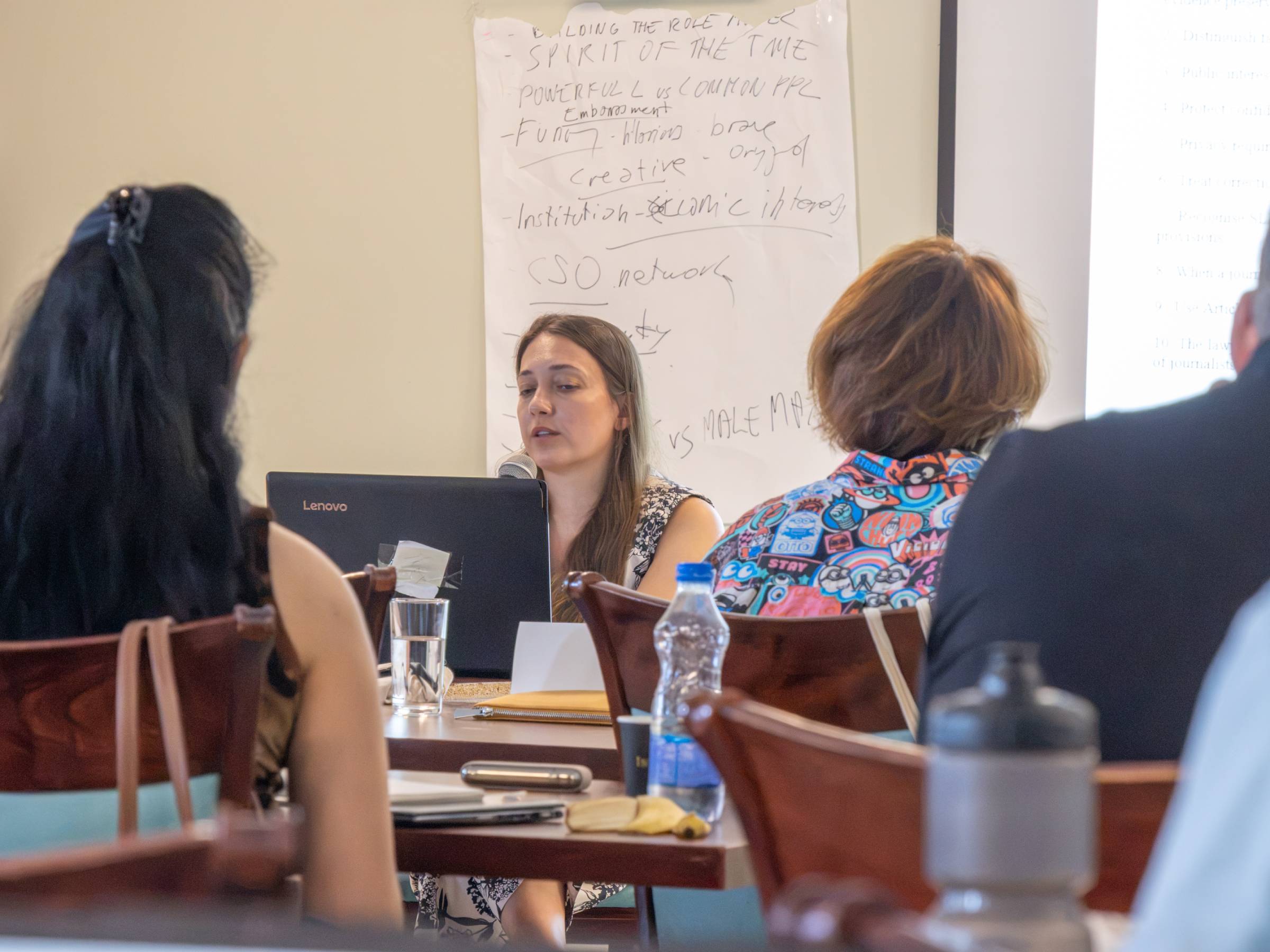
“We didn’t know that it would work, but we did some steps that made some changes,” says Xharra. “Try and test the institutions. I contacted them, and at first, they were laughing. In Kosovo, until 2008, there was no country, so we were all a little bit playing the state. I call that moment ‘a spirit of the time’.”

She also shared what affected the success of these TV shows.

“Its frequency – the TV show was broadcast daily – different locations and by using the colloquial Albanian language, which were just some of the success elements, this series had a big impact,” says Xharra.

Xharra also explained how BIRN has grown into an organisation of engaged journalism and how BIRN investigations contributed to the changes in Western Balkans countries.

The second part of the day started with the lead trainer Blake Morrison’s session on interviews.

“You have to show confidence in your own skills. You have to think about how you’ll present yourself, and play out the many possibilities,” stressed Morrison.

“Don’t get flustered. This goes with how you handle pressure. We need to show humility because we ask people to trust us and to help us. Don’t be afraid to ask for help when you don’t know something,” added Morrison.

Morrison shared experiences from several stories he worked on and what their impacts were. He also shared tips on how journalists can help their interviewees open up and talk about the subject at hand.

“Let’s not twist the arm, let’s hold the hand and build the trust,” concludes Morrison.

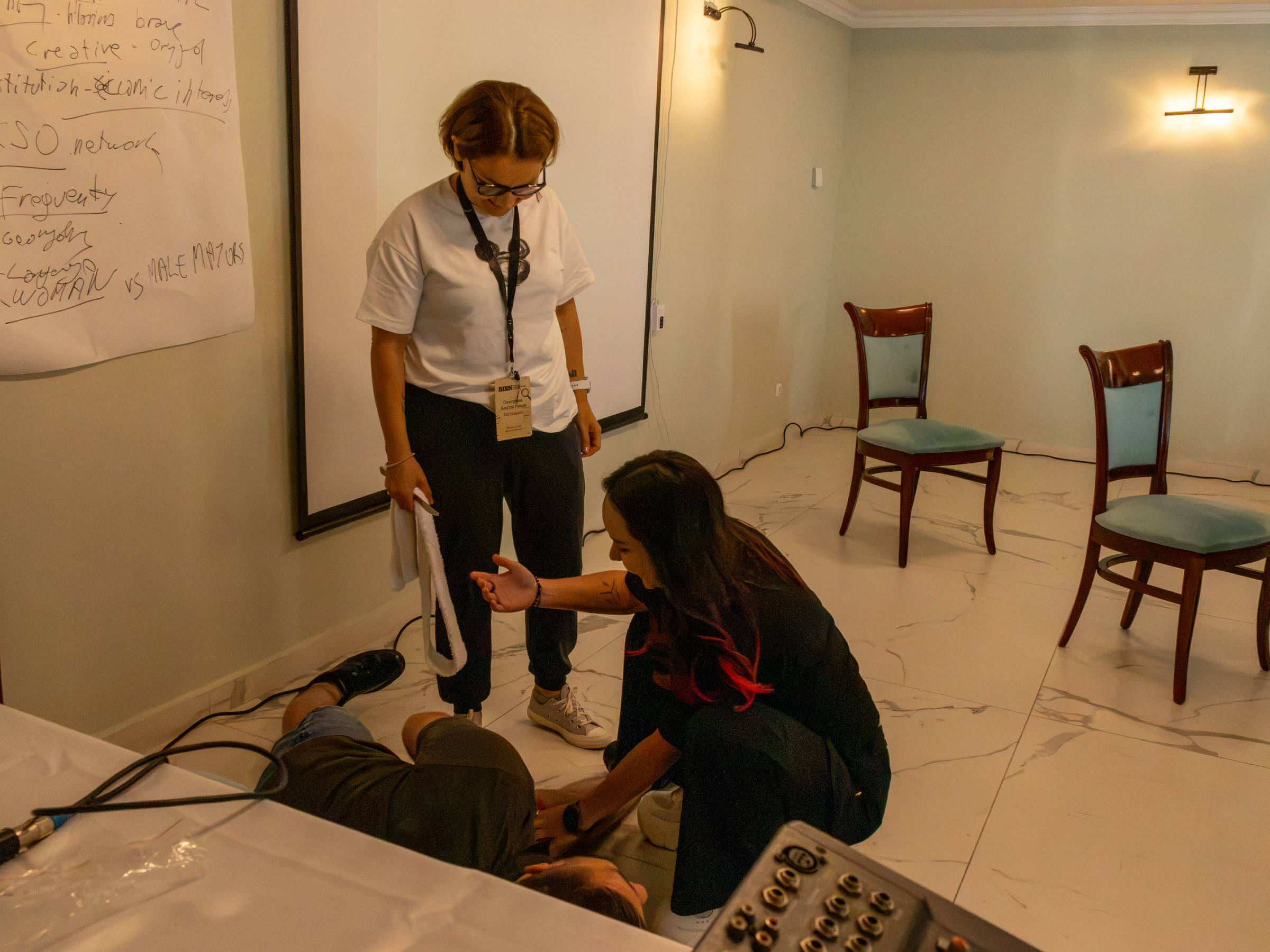
The third day ended with Sharbil Nammour’s scenario-based exercises and live problem-solving. Nammour showed how to help someone and save lives during unexpected situations, such as riots and protests, and how to provide first aid in the event of choking or bleeding.

“Be always active in this loop – observe, adapt and act. Most people freeze in such moments,” explained Nammour.

BIRN Summer School 2026 – Day 2: Open-Source Intelligence and Advanced Data Journalism

During the second day of the BIRN Summer School of Investigative Reporting 2026, participants had an opportunity to learn more about open-source intelligence and advanced data journalism from the top experts in the field.

by Aleksandra Vrbica

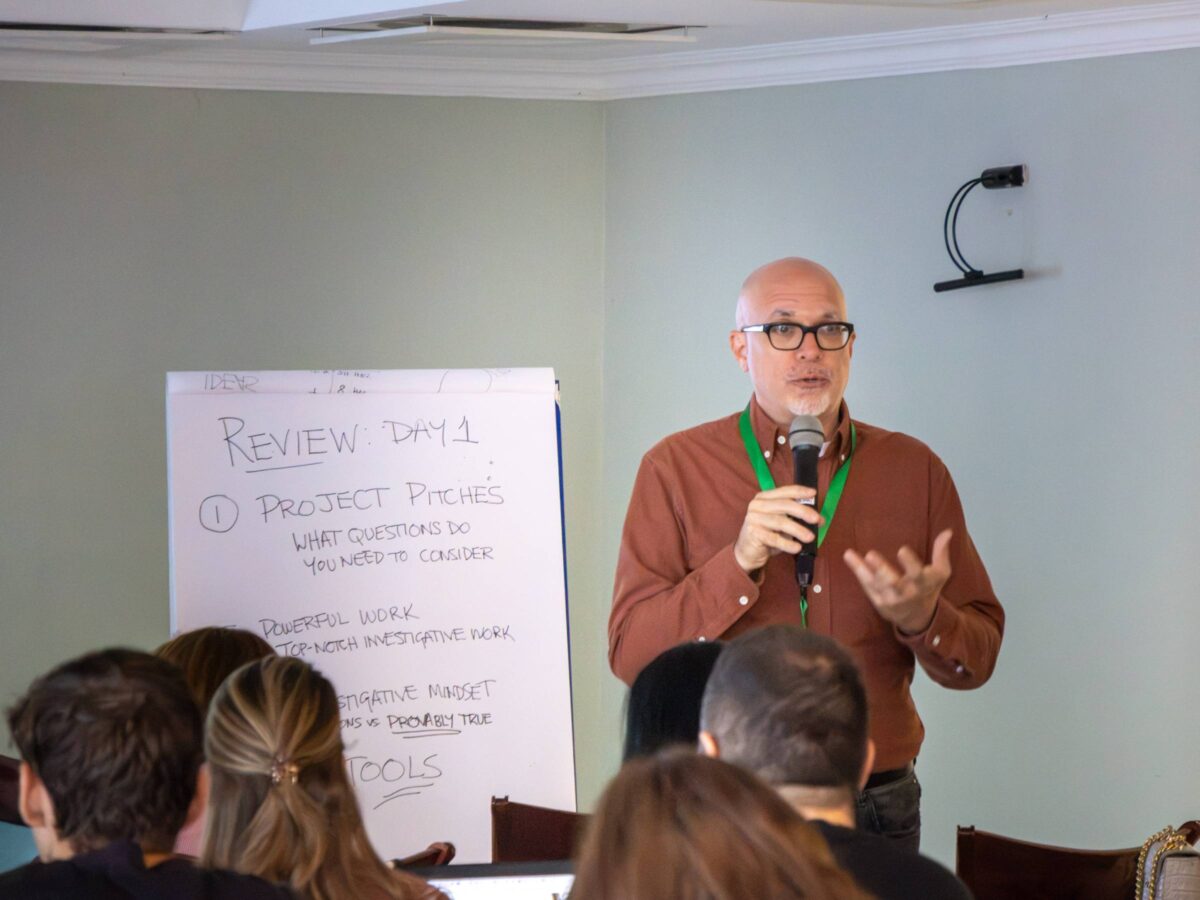
The second day of the BIRN Summer School of Investigative Reporting in Ohrid, North Macedonia, started with lead trainer Blake Morrison’s wrapping up of Day 1, followed by a masterclass in open-source intelligence. This masterclass was led by Reade Levinson, visual investigations reporter at Reuters News.

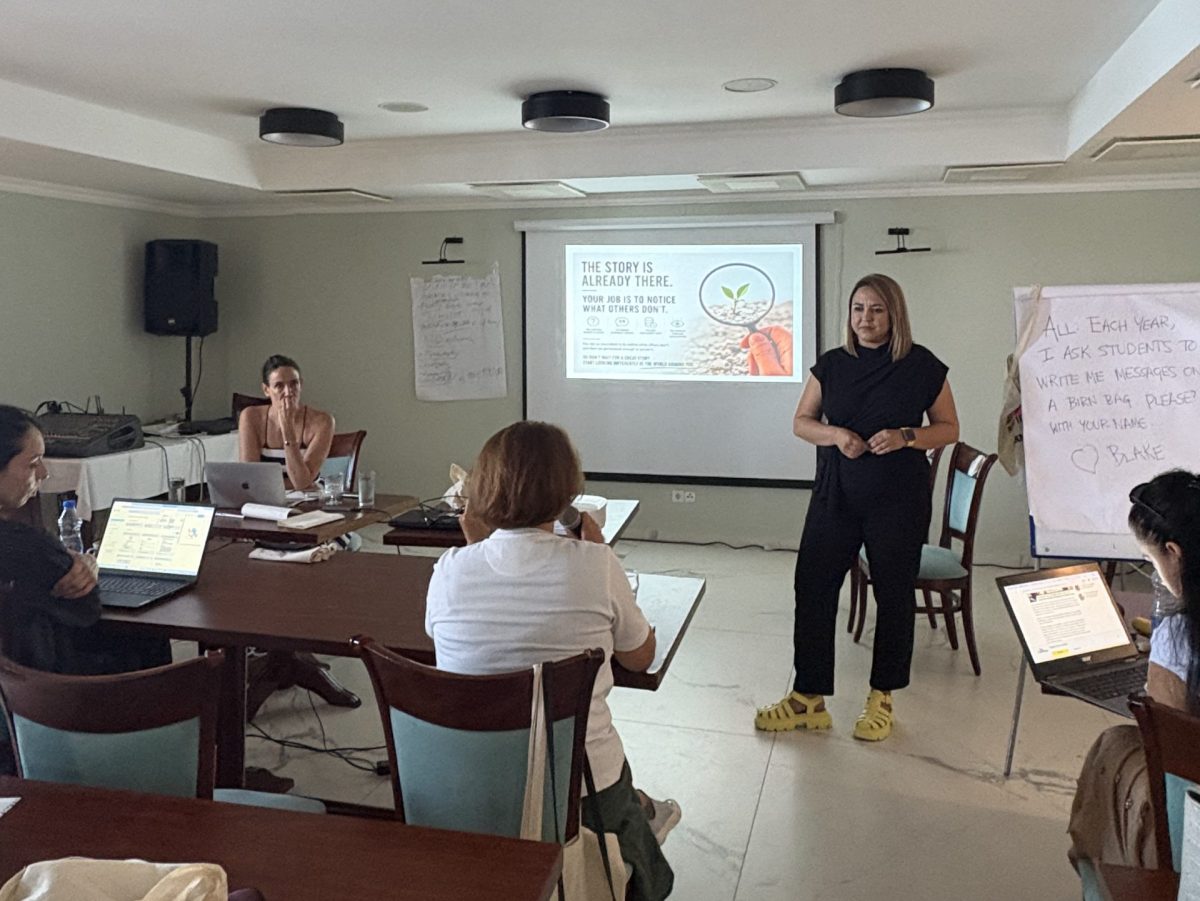
Levinson showed participants how to improve their online search for images and data using different tools to find and verify publicly available information. Through practical exercises, participants learned useful tips and tricks on how to find data that is not easily accessible through Google.

She also explained how to use tools on social media to gain more information for investigations.

“The algorithms are getting better and better. When I did an investigation on the Nigerian army, I used TikTok,” Levinson said.

Participants had an opportunity to learn more about these tools through exercises, which included videos of the “Flamingo” revolution in Albania and the wildfires that broke out in Croatia this summer.

After Levinson’s masterclass, Jonathan Soma, professor of data journalism at Columbia University Journalism School, shared approaches to data analysis using the data tool Pandas and coding with the help of AI.

Together with Soma, participants did several exercises on coding basics in PDF files and learned how to find, analyse and change data in these files, using the Python programming language.

“All you need are patterns that you copy and change,” said Soma.

However, since journalists aren’t programmers, Soma showed participants how AI can make their work much easier, especially when data visualisation is needed.

“What you really want to ask ChatGPT and other AIs is to design the tool, which it will design for you. And for that, Claude is better than ChatGPT,” explained Soma.

In response to the question of why it is important for journalists to know coding basics when AI can do so much, Soma responded:

“Every single concept you know becomes a building block you can glue together. The more blocks, the stronger your foundation.”

The second day ended with Soma’s session on how AI transformed newsrooms, data and document-based investigation.

“Data journalism enabled small newsrooms to do really big investigations,” Soma said.

BIRN’s 16th Summer School Begins in Ohrid

The Balkan Investigative Reporting Network (BIRN) kicked off the 16th edition of its Summer School of Investigative Reporting in Ohrid, North Macedonia, led by some of the world’s top journalists.

by Aleksandra Vrbica

On Monday, August 18, the 2026 BIRN Summer School of Investigative Reporting officially began in Ohrid, bringing together journalists from across the region and beyond for a week of intensive learning, collaboration and investigative journalism.

The week-long summer school brings together around 30 participants from Albania, Bosnia and Herzegovina, Croatia, Kosovo, North Macedonia, Serbia, Ukraine, Romania and Bulgaria. Over the course of the programme, they will learn how to distinguish suspicion from fact and set high standards for investigative reporting.

The participants were welcomed by Ana Petruseva, BIRN Macedonia Executive Director; Gentiana Murati, BIRN Deputy Director; and Blake Morrison, lead trainer and Investigative Projects Editor at Reuters News.

The first day started with Blake Morrison‘s session, which set the tone for a week focused on one central question: How do we go beyond reporting what is happening and investigate why it is happening?

During the introductory presentation, Morrison presented a case study of a journalist who reported untruthfully, explaining the consequences for the profession as a whole and those who become the victims of fabricated stories.

Gordana Andric, Investigative Editor at BIRN Hub and BIRN Serbia, also discussed formulating story ideas and how participants should structure their pitch.

The session guided participants through the steps of developing a story idea into an article proposal. There was a discussion on sources and newsworthiness, how to move from a broad topic to a specific angle, what the key elements of every pitch are and why all of this matters.

During the second part of the day, a Q&A session was held with BIRN investigative journalists Gordana Andric, Sasa Dragojlo and Ana Petruseva, moderated by Jeta Xharra, BIRN Kosovo Director.

The session brought together BIRN’s leading investigative journalists to discuss how they developed stories from initial ideas into impactful investigations. Through a moderated Q&A and discussion, participants explored the editorial choices, research, challenges and investigative approaches behind 10 selected stories, gaining practical insights from the journalists’ experience.

Among other things, Petruseva presented BIRN Macedonia’s interactive online database Skopje 2014 Uncovered, which documents and maps the publicly-funded buildings, monuments, facades and sculptures that transformed the capital city. She gave input into how information of public interest can be checked.

“First, we relied on the electronic system. But the problem was – and this is how we figured out that the government wanted to hide this from us – there would be a lot of typos in the documents. You would go to a certain building, and it wouldn’t be the correct address,” Petruseva said, explaining some of the issues they experienced while working on this investigation.

Petruseva also presented the database on religious communities’ assets in North Macedonia.

Sasa Dragojlo explained how BIRN worked on a story about Serbian-Israeli ammunition cooperation and the latest investigation on Serbian President Aleksandar Vucic and his connection with Jorg Heeskens, who has been advising Vucic almost since the moment he took power. Documents obtained by BIRN/Der Spiegel show just how closely Heeskens has worked with Vucic on a deeply unpopular lithium mining project, exposing what critics say is German complicity in the president’s subversion of democracy.

Over the coming days, participants will work with experienced journalists and trainers to strengthen their skills in investigative reporting, develop story ideas, explore new research and digital tools, and learn how to turn questions and suspicions into well-evidenced investigations.

Inside the BIRN Summer School Where Journalism Gets Real

Most journalism training teaches you how to report the news. Very few places actually show you how investigative journalism works in practice.

That’s the idea behind the Balkan Investigative Reporting Network Summer School of Investigative Reporting.

Each year, it brings together journalists and journalism students from across Europe for an intensive week where participants don’t just learn about investigative journalism; they learn how to do it.

The programme combines learning and practice. Participants are introduced to key elements of investigative journalism, such as story development, open source intelligence OSINT, data journalism, fact checking and digital security.

These are explored through real examples and hands on exercises guided by experienced national and international journalists, editors and experts in the field.

What makes it stand out is the way learning happens in practice. Instead of staying in theory, participants apply what they learn immediately, developing ideas, testing information and improving their reporting step by step with feedback from trainers and peers.

As one participant shared: “I came to the Summer School hoping to learn new investigative techniques and meet journalists from across the region. It turned out to be much more than that.

“The programme was intensive, every day brought something new, and by the end of the week it felt like we had known each other for years. Learning from experienced editors, receiving feedback from different mentors, and building lasting friendships made it an unforgettable experience.” – Tamara Kanuchova, Reporter, VSquare.org & The European Correspondent (Slovakia)

Another added: “What I loved most was that we were not just sitting in lectures. We worked with journalists from different countries, challenged each other’s ideas, travelled for field reporting, and turned our pitch into a published investigation. I still use what I learned during the Summer School, and I am still in touch with many of the people I met there.” — Patrik Galavits, Reporter, Direkt36 (Hungary)

By the end of the week, participants don’t just understand investigative journalism, they have actually practiced it in a collaborative environment shaped by international expertise.

A key part of the programme is that participants come with their own investigative story ideas and develop them throughout the week. From the start, they work on their pitches through all sessions, refining them with guidance from experienced national and international journalists, editors, and trainers. Participants also can work one-on-one with trainers to strengthen their ideas.

At the end of the programme, they formally pitch their investigations. Selected pitches receive financial support as well as continued editorial mentorship from experienced editors at Balkan Insight, helping participants further develop and pursue their stories beyond the Summer School.

Join the 2026 BIRN Summer School in Ohrid

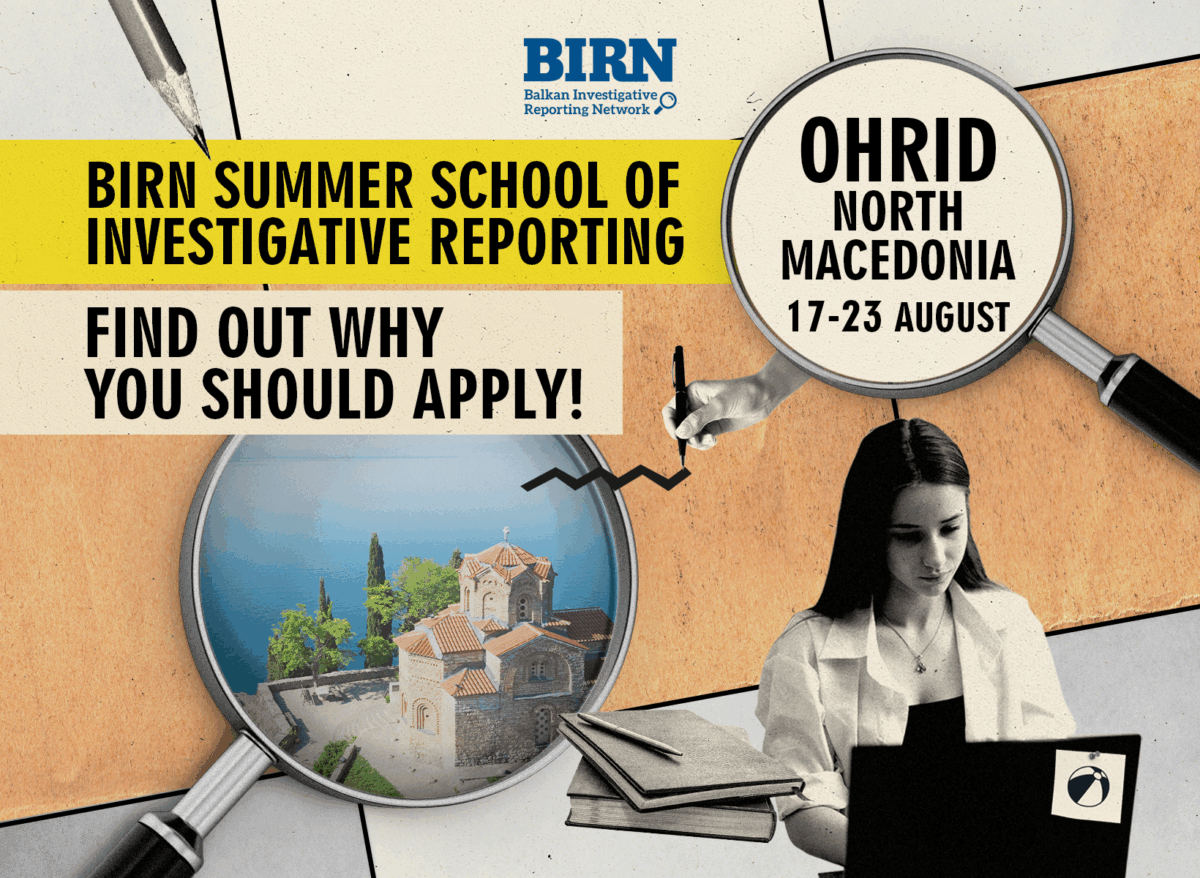
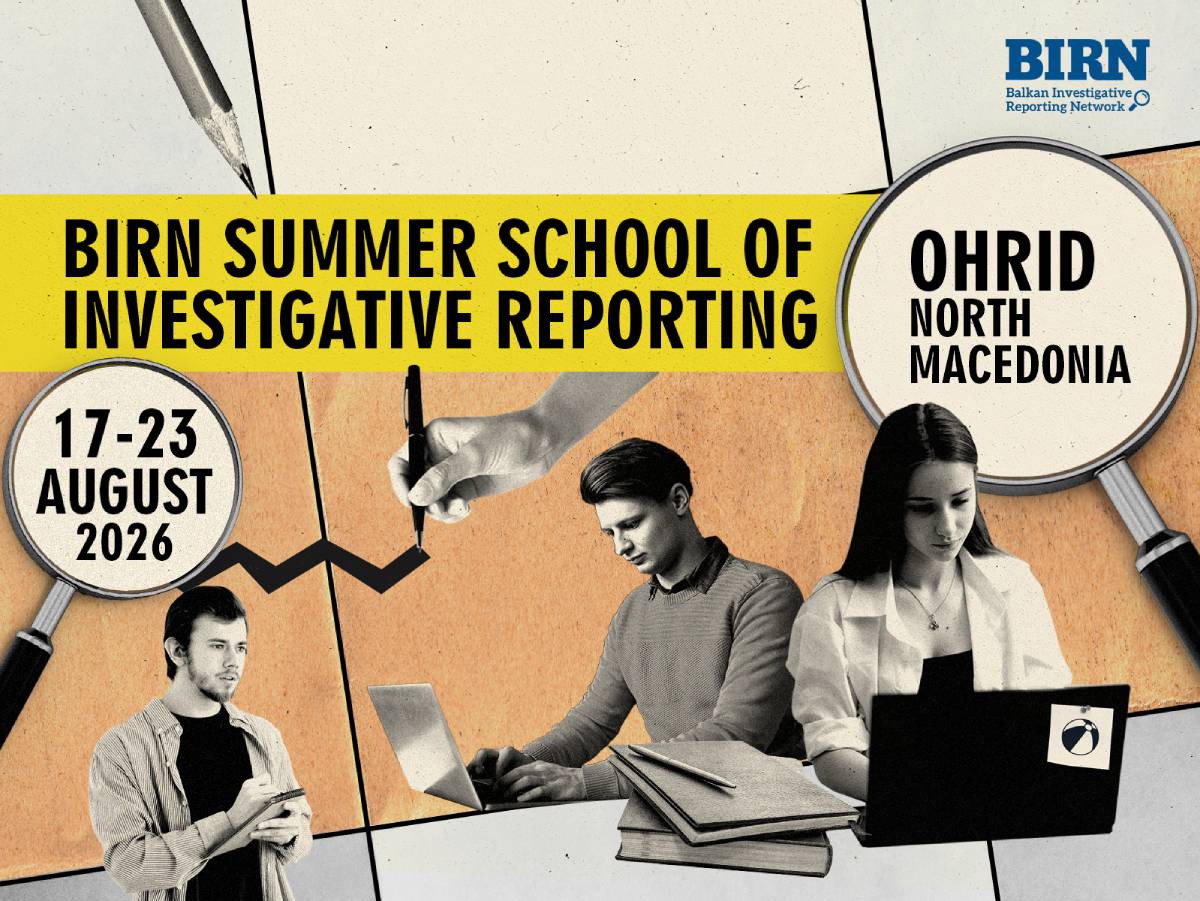
In 2026, the programme will take place in Ohrid, North Macedonia, from 17 to 23 August. It is designed for journalists and journalism students who want to strengthen their investigative journalism skills and learn directly through practice from experienced national and international journalists, editors and experts.

📍 Ohrid, North Macedonia
📅 17–23 August 2026
🗓️ Application deadline: 10 July 2026

👉 Apply here: https://birnsummerschool.org/news-and-events/birn-summer-school-of-investigative-reporting-2026-dont-just-report-the-news-investigate-it/

BIRN Summer School of Investigative Reporting 2026: Don’t Just Report the News – Investigate It!

Fast stories fade. The important ones need digging.
Applications are now open for the BIRN Summer School of Investigative Reporting 2026. This is a space for journalists who want to move beyond daily reporting and focus on real investigative work.

This is not about producing more content. It is about learning how to ask sharper questions, follow stronger leads and turn ideas into investigations that matter.

The Programme

From August 17 to 23, 2026 in Ohrid, North Macedonia, participants will join an intensive, hands-on investigative programme focused on cross-border reporting, open-source investigations and data-driven storytelling.

This year’s focus is on how investigative journalism is evolving in a complex information environment, combining traditional reporting with digital verification, OSINT tools and structured data work.

Alongside the main investigative sessions, participants will take part in practical workshops on verification, digital security and visual investigations. These are designed to strengthen both technical skills and editorial judgment.

Who This Is For

We are looking for journalists from the Western Balkans and across southeast Europe who want to move from reporting events to uncovering systems, patterns and accountability.

We especially encourage applications from early and mid-career journalists, particularly those working in difficult or under-resourced media environments where investigative reporting is both challenging and essential.

BIRN is providing up to 30 full scholarships for selected participants from the Western Balkans and across southeast Europe.

Self-funded participation is also welcome.

Mentorship and Editorial Support

This is a working environment, not a lecture series.

Participants will develop their own investigative ideas from the very beginning and receive continuous editorial feedback from experienced international journalists and trainers. The focus is practical and hands-on throughout the week.

Mentorship includes guidance on sourcing, verification, story development, structure and investigative methods, with close support as each project develops.

Trainers

This year’s programme includes Blake Morrison from Reuters, who leads complex cross-border investigations, Jonathan Soma from Columbia University, who specialises in making data clear and usable in storytelling, Sharbil Nammour, a media safety expert focused on secure reporting in challenging environments, and Reade Levinson from Reuters Visual Investigations, known for uncovering stories through open-source and visual evidence.

More trainers will be announced as the programme develops.

Why It Matters

Investigative journalism takes time, patience and space to think. That space is becoming harder to find. This programme is built to give it back.

Join Us

If you have a story idea that has stayed with you, one that deserves more than a headline, this is the place to take it further.

Prepare your pitch, apply and join us in Ohrid.

Applications are now open.

Apply here: Application Form for BIRN Summer School of Investigative Reporting 2026 | ECR Platform.

The deadline to submit your application is July 10, 2026. Take the next step towards developing your investigative story with leading journalists and trainers from the region and beyond.

Don’t Just Report the News: Go Deeper and Investigate it

The BIRN Summer School of Investigative Reporting 2026 is coming to the beautiful city of Ohrid, North Macedonia this August 17-23.

This is a space for curious minds and future journalists who want to understand the step by step process through which investigative stories are built, from the initial idea to final publication.

Over one week, you will work closely with experienced journalists, editors, and open-source intelligence experts. You will learn how to find and verify information, work with data and public records, and develop stories that truly matter.

In the coming weeks, we will open the call for applications and share more details about the programme, including scholarships, mentors, speakers, and trainers from leading local and international newsrooms.

If you have ever wanted to understand how investigations are really done, this is your chance. Stay tuned.

The next generation of investigative journalism starts here.