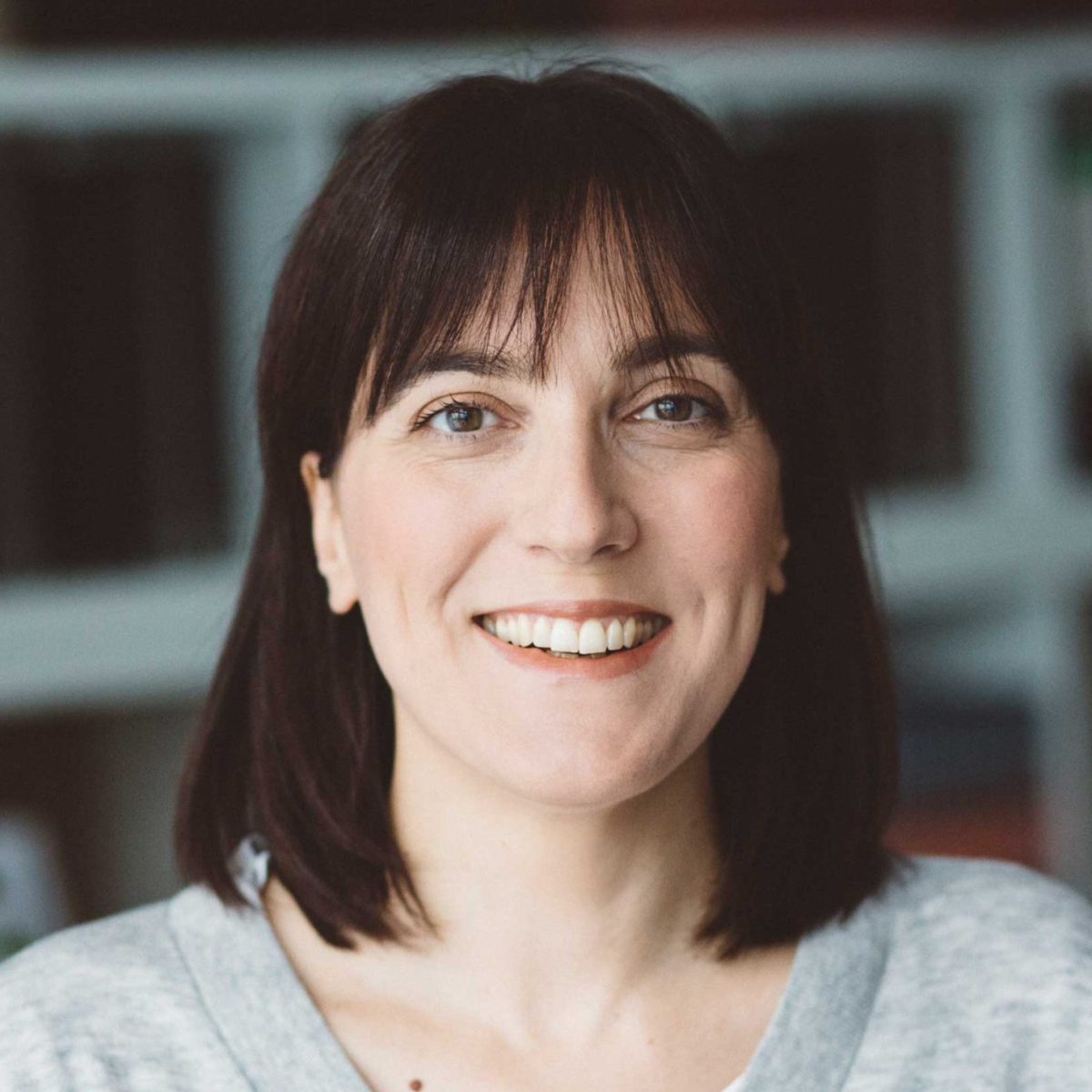
Meg Kelly

Meg Kelly is a video reporter for The Washington Post’s Visual Forensics team.

Previously, she produced video and reported for The Post’s Fact Checker and covered the 2016 election for NPR as a visual producer. As Fulbright Scholar in India, she produced a multi-media exhibition and oral history project that explored the structure of Dharavi’s informal political and economic sectors. She has also reported on local politics, development and urban agriculture in New York City. 

She has received a number of honors and Aawards: Honorable Mention, Toner Prize for Excellence in Political Reporting, 2019; Fulbright-Nehru Scholar, 2010; U.S. State Department Critical Language Scholar for Punjabi, 2009

Meg Kelly has also written a book Donald Trump and His Assault on Truth: The President’s Falsehoods, Misleading Claims and Flat-Out Lies.


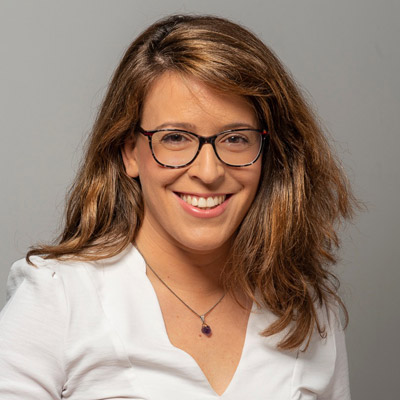
Sarah Cahlan

Sarah Cahlan is a video reporter for The Washington Post’s Visual Forensics team.

Before coming to The Post, she directed a short documentary about the historical inaccuracies of gender roles. As an NBC/NAHJ fellow, she reported, produced and wrote stories about science, tech and Latino culture. Cahlan has also covered health and the environment in California. 

Honors and Awards: 2022 Pulitzer Prize for Public Service; 2021 Alfred I. Dupont-Columbia University Award; 2020 Webby Award for Best Individual Feature ; 2020 Online Journalism Award Features finalist; 2020 International Fact Checking Network for Best Format; 2019 North Gate Award for Excellence in Documentary Production; 2018 National Association of Black Journalists, Salute to Excellence; 2018 Excellence Award, Robert Whittington Award for Exceptional Reporting

Professional Affiliations: National Association of Hispanic Journalists.

Applications Open for BIRN Summer School 2022 in Slovenia

Portoroz and its stunning coastline will be the setting for the BIRN’s Summer School for Investigative Reporting this August.

The 12th edition of the BIRN summer school will take place from August 22 to 28 in Portoroz and will gather top journalists and editors from Southeast and Central Europe and across the world to train reporters.

As part of the school, you will learn how to conduct open-source research, dig for big data, read complicated financial reports, convince difficult sources to talk and conduct cross-border investigations.

The training will provide a wealth of knowledge for both inexperienced and experienced investigative journalists. After training in the morning for all participants, break-out sessions in the afternoon will give you the choice to focus on more niche subjects – from illicit finance tracking to far-right groups and digital rights, among others.

Journalists will also receive training on digital security.

We are providing 30 full scholarships for selected participants. This will cover accommodation, meals as well as transportation expenses of up to 150 euros. Apart from the training, editorial support and mentorship, through our Investigative Initiative Story Fund, BIRN will provide participants with money to support story development and production.

Scholarships are offered to journalists from the following countries: Albania, Bosnia and Herzegovina, Bulgaria, Croatia, Czech Republic, Greece, Hungary, Kosovo, Moldova, Montenegro, North Macedonia, Ukraine, Poland, Romania, Serbia, Slovakia and Turkey.

Limited spots are also available for international participants who need to cover a fee of 700 euros. This includes the training curriculum and full board at the Boutique Hotel Portorose, where the summer school is taking place.

Portoroz belongs to the municipality of Piran in Slovenia, located in the southwest of the Gulf of Trieste between the boundaries of Italy to the north and Croatia to the south.

Applications close on July 31.

Click here to apply!

BIRN’s Investigative Summer School 2021 Opens in Croatia

For the 11th time, BIRN’s flagship Summer School of Investigative Reporting is bringing together journalists and award-winning trainers for a week-long programme intended to develop skills and explore new techniques.

This year’s Summer School of Investigative Reporting started on Monday in the Croatian coastal village of Mlini with lectures about how to use open-source investigative techniques and to trace the documents behind policy decisions.

During the week-long programme, 32 journalists from Albania, Bosnia and Herzegovina, Kosovo, Montenegro, North Macedonia, Serbia, Romania, Turkey, Bulgaria, the Czech Republic, Poland, Moldova, Greece and Croatia will be acquiring new investigative skills and techniques but also working on real investigative reports.

For the first time this summer, the applicants had the chance to choose one of four course themes: Arms, Surveillance, Agriculture and Waste. During the week, they will be divided into four teams, led by trainers from BIRN and Lighthouse Reports, to investigate leads and produce cross-border stories.

Marija Ristic, the regional director of the Balkan Investigative Reporting Network and also one of the lead trainers, welcomed the participants and trainers on Monday, saying that the Summer School is a unique opportunity for journalists across the region to gain skills from top trainers in investigative journalism.

“We will also have a bit of a different programme than usual, consisting of both training sessions and working on stories covering pressing issues like surveillance, the arms trade and environmental topics. The work on the investigations will continue after the School but we aim to finish as much as we can during this week,” Ristic said.

Ludo Hekman, another lead trainer and editor and founder of the Lighthouse Reports, said that the concept of the School enables journalists to immediately apply what they have learned in working on actual investigative stories.

“This is an efficient and inspiring way to work. It is also important if you can apply what you learn immediately; another objective is to learn from one another and go home with the report, with some compelling information,” Hekman said.

After the opening remarks, Leone Hadavi, a freelance open source investigator and a contributor to the Lighthouse EUArms project, held a session entitled ‘Open-Source Investigative Techniques: Basics for Investigative Journalism’.

Hadavi introduced the participants to open-source investigative techniques and talked about their importance in conducting investigations. He offered various useful tips and tools on how to do an image reverse search and how to geo-locate videos and images found on social media.

“It happens sometimes that you receive images or videos from people arguing that something happened yesterday or two years ago. We cannot trust anyone and we need to verify every single piece of information we get,” Hadavi explained.

The first day ended with Lise Witteman, an independent reporter on the EU who specialises in following the paper trails of European decision-making processes. Witteman explained to the participants how to trace the documents that lie behind policy decisions.

She said that following European Union politics is tough and was particularly so when she first began covering it: “It was a challenge to decide what could be a story as there were so many files, so many documents, you could drown in all this information,” she said.

She also talked about the toolbox she has developed over the years, which helps her search through documents, names and procurements to narrow down the huge amounts of information.

In the coming days, there will be sessions focusing on data journalism and investigating the management of borders. The vast majority of the time, however, will be dedicated to working in groups and investigating specific leads that relate to the four chosen topics.

Maud Jullien

Maud Jullien is a freelance journalist and documentary filmmaker. She is currently an instructor and investigator with the Lighthouse EUarms project and editor-in-chief of the Africa News bulletin on TV5 Monde.

Maud Jullien worked for the BBC as a correspondent for 7 years based in Dakar, Senegal, and Kinshasa, DR Congo, producing short and long-form radio and TV reports on West and Central Africa. She has produced reports for the BBC’s investigative programmes Africa Eye, Newsnight and crossing continents.

In 2018 she moved to France to study documentary cinema and has since been working as a freelance investigative journalist, editor-in-chief and filmmaker collaborating with the BBC and French channels Arte, France 24 and TV5 Monde. She began working as an open source investigator on the EUarms project with Lighthouse in 2019, and has since taken part in workshops on arms exports in France and in Spain.

Ludo Hekman

Ludo Hekman is a journalist and editor. He has worked in print and online media as well as in TV, reporting from countries including Iran, Iraq and Afghanistan.

He has pioneered many new collaborative investigations with Europe’s leading media. He has won the Citigroup Excellence in Journalism award and has been nominated for several Prix Europa awards.

Ludo Hekman is an investigative journalist, editor and founder of Lighthouse Reports. He started his career as a freelance foreign correspondent working for print and online media as well as TV covering countries like Iran, Iraq and Afghanistan. His current focus is on collaborative newsrooms, with investigations on arms tracking, surveillance technology and industrial farming.

He is one of the founders of Lighthouse Reports, a non-profit based in the Netherlands that leads complex transnational investigations blending traditional journalistic methods such as freedom of information requests with emerging techniques like open source intelligence and specialisms like data science.

Lighthouse’s collaborative newsrooms pioneer new formats and pay particular attention to fresh ways of framing complex issues that will capture public attention and challenge misconceptions.

One of his projects – the arms tracking newsroom – challenges the status quo of EU arms exports. A European wide investigation covered over a 100 arms deals and documented a long list of EU and international violations. Most of the evidence was gathered with OSINT methods and while working in short sprints with temporary teams. These investigations triggered response in the EU parliament, campaigns by NGOs across Europe and legal cases against governments and companies.

Hekman won the Citigroup Excellence in Journalism award and has been nominated for several Prix Europa awards.

Lise Witteman

Lise Witteman is an independent EU-correspondent who specialises in following paper trails of the European decision making processes, from the interests of (national) politicians and lobbyists and their influence on EU policy to the way EU taxpayers’ money is being spent. 

Lise Witteman is an independent EU-correspondent who specialises in following paper trails of the European decision making processes from the interests of (national) politicians and lobbyists and their influence on EU policy to the ways EU taxpayers’ money is being spent.

After having worked as a political reporter for about eight years in The Hague, Lise quit her job and moved to Brussels in 2018 as an independent correspondent to investigate EU-policy and write in-depth stories on EU-matters. She mostly writes for the Dutch investigative platform Follow the Money and the weekly magazine De Groene Amsterdammer. She also cooperates with international journalism projects such as those of Lighthouse Reports.

In september 2021, her book ‘Sluiproute Brussel’, Shortcut Brussels, on the hidden EU-agenda of the Dutch government will be published. At the same time, she launched the EU-media desk, Follow the Money. With two other EU-specialised journalists, its purpose is to continuously set up and coordinate investigative projects on EU-matters.

Leone Hadavi

Leone Hadavi is an open source investigator, analyst and trainer. He has a background in security studies and international law.

Leone Hadavi is an open source investigator and analyst. He has an MA in War and Security Studies and an LLM in International Humanitarian Law, International Criminal Law of Armed Conflict. He worked as an intern analyst at the International Criminal Tribunal for the former Yugoslavia, ICTY, at the Extraordinary Chambers in the Courts of Cambodia, ECCC, and at the International Criminal Court, ICC. At the ICC, he first started applying OSINT techniques to investigate the use of technicals by the Seleka armed group.

He is best known for his contribution to the Lighthouse EUArms project, where he has led the tracking of arms and services provided by European companies and states to dictatorships, conflict zones and controversial actors. He is a Bellingcat contributor, and among his most notable collaborations are Libya’s ‘Game of Drones’ with the BBC and The Killing of Muhammad Gulzar with Forensic Architecture. He is also a race bike rider and cinema enthusiast.


Maximilian Popp

Maximilian Popp is the Deputy Head of the Foreign Desk of the German newsmagazine Der Spiegel.

Maximilian Popp was born in Passau Maximilian Popp in 1986. He graduated from the Henri Nannen School of Journalism in Hamburg and studied political science in Istanbul. He has been working for Der Spiegel since 2010, initially as an editor in the Germany department in Dresden, Hamburg and Berlin, and, since 2016, as a correspondent in Istanbul. He has also been the Deputy Head of Foreign Affairs since April 2019.

For his reporting on Turkey, he was awarded the South East European Society’s Journalism Prize.

Myrto Boutsi

Myrto Boutsi is a reporter and an international news editor based in Athens. 

Myrto is a member of Reporters United and has cooperated with European Investigative Collaborations (EIC) for the production of the documentary Black Trail. She is also an international news editor in powergame.gr. She studied theatre at the National Kapodistrian University of Athens and sociology at Goldsmiths College, University of London.

Since 2002, she has worked mostly in newspapers and has been head of the international desk at the newspaper, Eleftheria tou Typou. In 2008, she co-founded the Non Stop Media Production Company. She has collaborated with ARD, the documentary series Exandas and Tribes of Athens (Fyles tis Athinas), which were both aired by Greek Public Television NET, Metro Magazine, online media Inside Story and Solomon.