
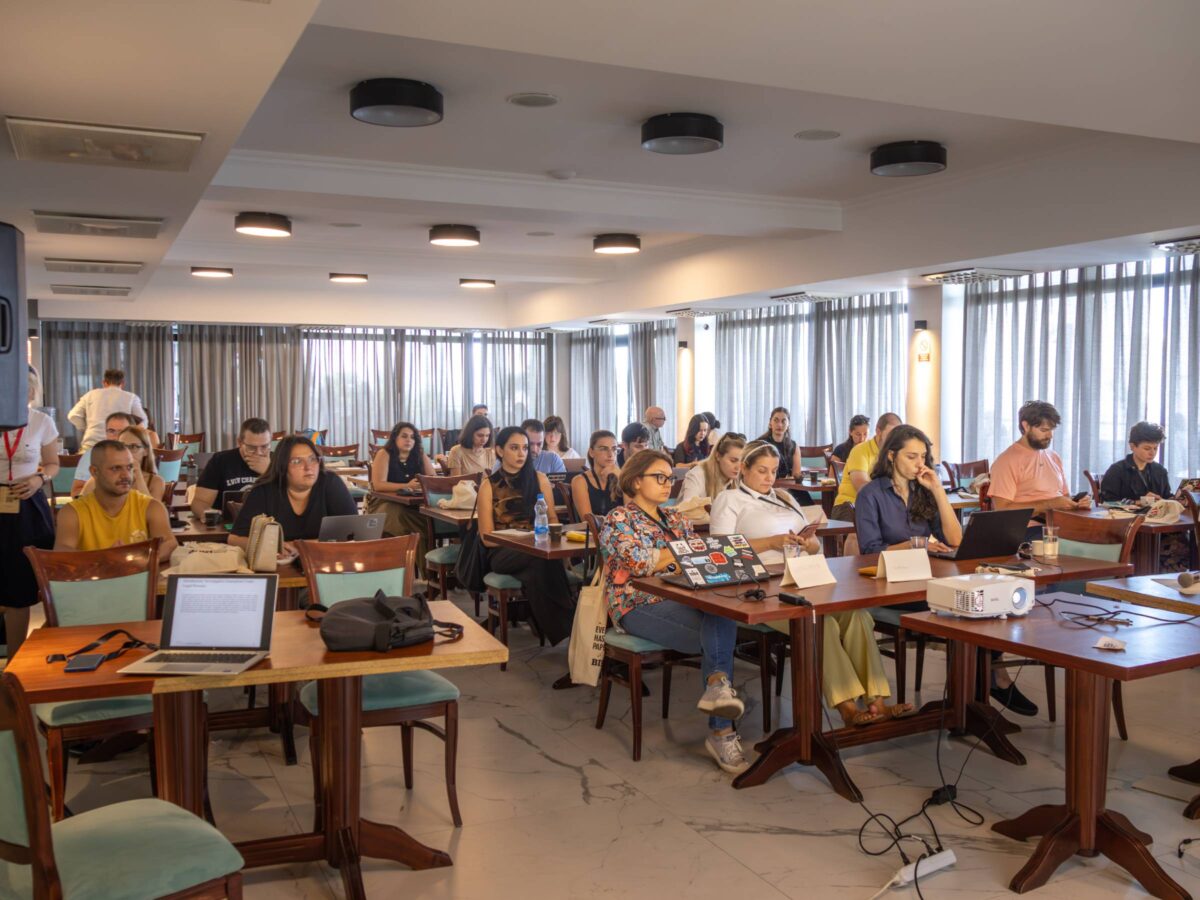
by Aleksandra Vrbica
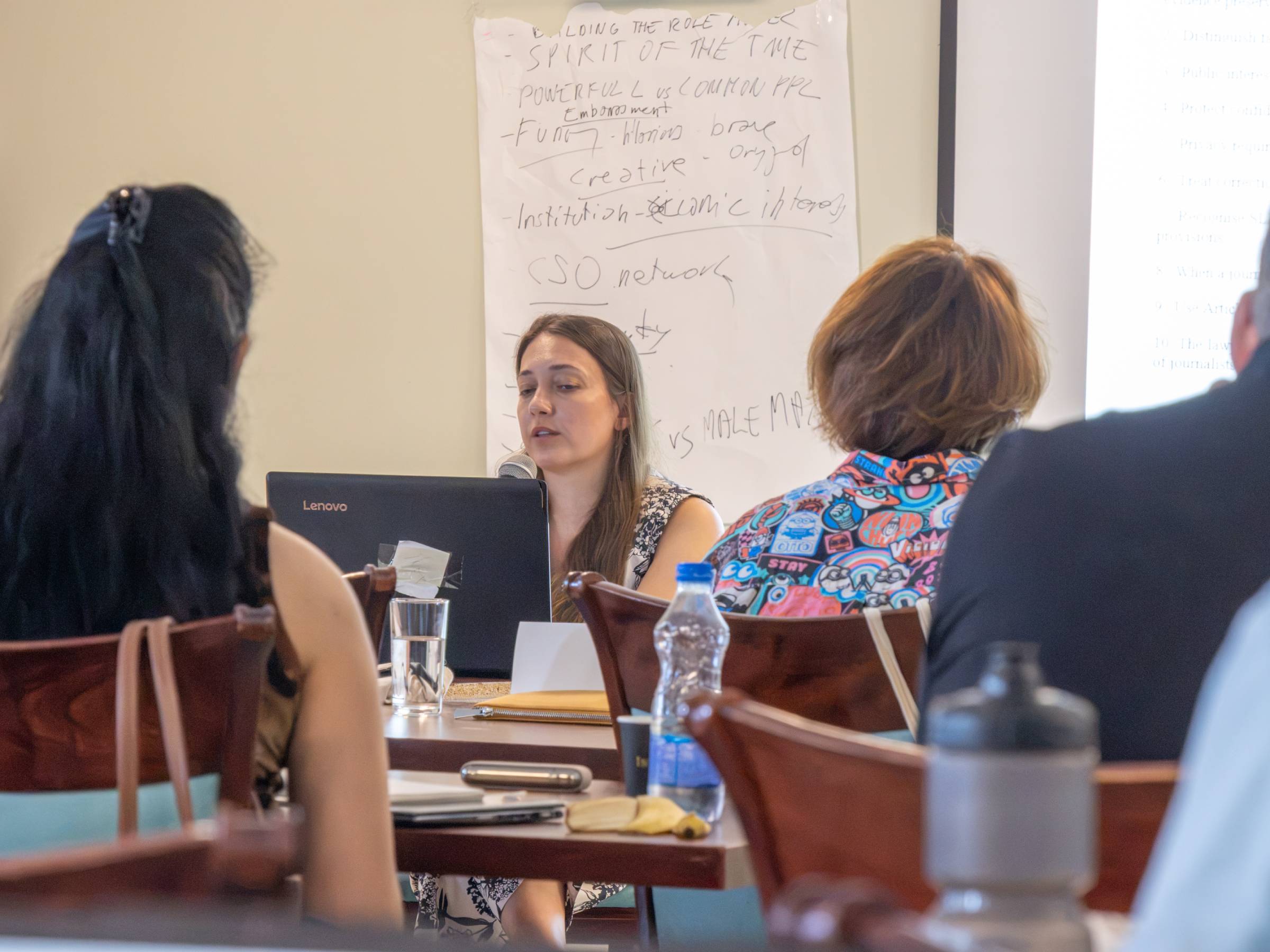
The fifth day of the BIRN Summer School in Ohrid opened with Bojana Paneva, Senior Associate at Qoku & Partners in Skopje. She spoke to participants about reporting under legal pressure, with confidentiality one of her concerns.
“Confidential sources are frequently indispensable to investigative journalism. Individuals with knowledge of corruption, institutional misconduct or corporate wrongdoing may be willing to speak only if their identity is protected. Macedonian law recognises this directly,” stated Paneva.
She also explained the legal measures for protecting journalists and shared several cases from her experience.
After Paneva, Balkan Insight journalist Azem Kurtic held a session on geolocation and visual investigation.
Kurtic presented a case study in which the location was detected based on a single photo. It followed the conviction of a Bosnian-born woman at a court in the Danish city of Odense, as detailed in the “Black Swan” documentary. She was found guilty of fraud and attempted fraud amounting to 1.8 million Danish kroner, receiving a three-month prison sentence, with an additional 15 months suspended.
“She declared bankruptcy, but journalists suspected that she moved some of her money back to Bosnia. Thanks to one photo, we found her villa in the country. It was a shadow, a swimming pool and a mountain view that gave it away,” said Kurtic.
The participants did an exercise based on Kurtic’s investigation on the criminal group from Bosnia and Herzegovina. They analysed every relevant detail from a photo of these people, using Google Street View and social media to determine the exact location and venue in Dubai where the photo it was taken.

BIRN Macedonia Director Ana Petruseva held a session on Freedom of Information (FOI) and how journalists can use it to strengthen their investigative reporting. Through real-life BIRN Macedonia examples, Petruseva explained why access to public information is important.
“These are just some basic rules – when to file a request: when other approaches and attempts haven’t worked, when you believe that it is the only way to get the information and when you deliberately want to exercise your right to it,” she said.
Petruseva explained where FOI requests should be filed and what to ask, as well as giving exceptions. Petruseva also addressed the importance of timing.
“In 2016, there were elections in Macedonia, and in 2017, a turmoil followed, which led to the attack on the Parliament. We were aware that the change of government was coming. Knowing that, we filed requests to several ministries at the same time for the documents that showed all the representative costs, which included buying suits, paying dinners, and some bizarre costs. That way, we were able to gain all this information from the new government,” explained Petruseva.

BIRN Albania’s Editor in Chief Besar Likmeta introduced the “Flamingo Revolution” to participants and explained the importance of environmental journalism in the middle of a protest. He explained how the reporting started on Jared Kushner’s controversial plans for coastal resort developments at Zvernec and Sazan Island.
“What we knew when we started investigating this topic? The land was disputed, there was a very sensitive, protected area, and the government wasn’t telling us what it was doing,” said Likmeta.
In this case, one story became five.
“We had a story about the environment. Than we had a story on property and who owns the contested land. We had the business investigation on who stands behind the development. We also had the investigation on government and who authorised the project, and what happens when citizens challenge the project, and what role does the organized crime play. And with Kushner’s role, this became an international topic,” Likmeta explained, adding that online activity also became important.
“Because of many trolls on social media, the information war came with the protest,” he concluded.

The fifth day wrapped up with a session on climate investigations, led by climate journalist and media trainer Diego Arguedas Ortiz.
“Why to report on fossil fuels? For the first time, we have the electricity that is produced more from the renewals, than from the coal, but it’s not fast enough because we need more energy every year”, he told participants.
Ortiz presented several resources journalists could use in their reporting.
“A few tools to understand where are the fossil companies and projects are Carbon Majors, Global Coal Exit List, Coal data from Global Energy Monitor,” he noted, illustrating how these tools could be used, as well as the benefits of geo-spatial mapping.
He also stressed energy and mining companies’ impact on nature and communities, noting that banks, law firms and PR agencies are among the enablers of their projects.
